Showing posts with label Wes Craven. Show all posts

Thursday, May 26, 2016

THE WICKED WEST


A few years ago, I decided to write a followup to my 2004 book Nightmares in Red, White and Blue, a cultural study of American horror films. 

At first, I imagined it as a book about horror remakes, reboots and “re-imaginations”—because those were dominating the genre at the time.  (This was somewhere in the lull between “torture porn” and PARANORMAL ACTIVITY.)   I outlined the book, started doing research, and even wrote a first chapter… then changed my mind.

When I came back around to the project a year or two later, I decided to make it a book entirely about supernatural / metaphysical horror films—focusing especially on films made since the mid-1980s.  I had been working for several years on a Discovery Channel series called A HAUNTING, which seemed to be in line with the latest trends in the horror genre, and I had strong opinions about why and how such stories work.  So I started writing.  Again I created a full outline, did some in-depth research, and completed a first chapter.  I was feeling pretty good about it, but somewhere along the line I got distracted.

One of the things that distracted me was exploring L.A.  Every weekend, my wife and I would go hiking at scenic spots in and around the city, and I quickly realized that every scenic spot in and around L.A. has been featured in a movie at some point.  Many of the more remote locations have a long history of use as filming locations, especially in westerns.  Although I had never been a particular fan of westerns—I naively thought it was a genre built on clichés—visiting these filming locations prompted me to start watching some studio-era westerns I'd never seen.  I found a great old-fashioned video store called Eddie Brandt’s Saturday Matinee that had a lot of stuff never released on DVD.  After that I was hooked.

Somehow, over the next few years, my prospective horror book became a book about westerns.  Initially, I thought of it as “a book about the other great American film genre about violence."  I had an idea that westerns generally presented a very conservative perspective on violence, while horror films are more liberal.  But that simplistic notion disappeared once I actually started watching the movies.  My hope is that end result of my cinematic exploration will be a compelling introduction to the genre for people like me: members of a certain generation (raised on action, horror and sci-fi films) who have never really given westerns a chance. 

2015 was a big year for westerns.  Films like THE HATEFUL EIGHT, THE REVENANT, and BONE TOMAHAWK made a big impression on younger moviegoers—in part, I think, because they aren't what we expect from westerns.  They are adventures, thrillers, horror films.  But still westerns.  Personally, I don’t believe that any genre is ever pure.  I can’t write about the horror genre without also writing about psychological thrillers and dark sc-fi, and sometimes even comedy.  I don’t think anyone can, or should, write about westerns in this day in age without also considering “hidden westerns” that are more readily identified with other genres.  (I borrow the term "hidden westerns" from filmmaker John Carpenter, who has made more than his fair share of hidden westerns.) 

When I started obsessing about westerns, I noticed that the most comprehensive and authoritative books on the subject tend to assume that the genre basically died in the mid-1970s, with maybe a few gasps of new life in the early 90s and late 2000s.  Being a horror fan, of course I love the idea that the western genre is undead… returned from the grave, somehow transformed by its years in purgatory.  Hence the title of my book: The Quick, The Dead and the Revived.

It’s not a book about horror-westerns.  It’s a book about the most intelligent and influential western films from 1939 to 2010, in the same way that Nightmares and Red, White and Blue was about the most intelligent and influential American horror films from 1931 to 2000.  I tried to examine all of the classic A-westerns.  There are three chapters alone on the 1950s, the decade that produced the most iconic films in the genre.  There’s also a chapter on spaghetti westerns, as well as chapters on urban westerns of the 1970s, space westerns of the 1980s, neo-westerns of the 1990s, and the postmodern westerns of the 2000s.  I think the book proves, beyond a shadow of a doubt, that the genre remains vital—if still somewhat hidden and underappreciated.

Now, because I know that my name on a book cover is probably not going to draw my fellow horror fans to the western genre, I want to point to some places where the two genres overlap in interesting ways.  I think most horror enthusiasts are vaguely aware of the more overt attempts to blend the two genres—mostly B-movies and DTV features about ghosts, vampires and zombies in the Old West.  Stuff like CURSE OF THE UNDEAD (1959), BILLY THE KID VS. DRACULA (1966), Charles Band’s GHOST TOWN (1988), DEAD NOON (2007) with Kane Hodder, etc.  I’m not a big fan of that type of horror-western.  I prefer more subtle overlaps.

Gary Cooper and Boris Karloff in UNCONQUERED
For example, I can’t watch Cecil B. DeMille’s western UNCONQUERED (1947), which stars Boris Karloff as the villainous Chief of the Seneca Indians, without thinking about how DeMille typecast Karloff as another “monster.”  (UNCONQUERED is a very un-PC movie.)  In a similar way, I can’t help but think of John Carradine’s performance as a rather effete Dracula (in HOUSE OF FRANKENSTEIN and HOUSE OF DRACULA) when I watch him in westerns.  And Carradine was in a lot of westerns, including some of John Ford's best work.  Likewise, Lon Chaney Jr.—best known for his performance in THE WOLF MAN and its sequels—made more western films than anything else, right up to the very end of his career.  Even Vincent Price dabbled in the genre, most notably in Sam Fuller’s THE BARON OF ARIZONA (1950).

My favorite early horror movies are those that came out of RKO in the 1940s, under the auspices of producer Val Lewton and directors Jacques Tourneur and Robert Wise.  So I was thrilled to find that Lewton’s only western, APACHE DRUMS (1951), plays like a forerunner to George Romero’s NIGHT OF THE LIVING DEAD.  (I was, in fact, so excited that I emailed Romero to ask if he’d ever seen it.  He said he hadn’t.)  Tourneur and Wise also made their own forays into the western genre.  Tourneur’s STARS IN MY CROWN (1950) is only marginally a western, but it’s a personal favorite of mine.  I think of it as an Old West version of Ray Bradbury’s Dandelion Wine, although STARS was made a few years before Bradbury wrote his novel.  Wise directed one of my favorite noir westerns, BLOOD ON THE MOON (1948), starring Robert Mitchum, as well as one of the most intense westerns of that time period, TWO FLAGS WEST (1950).  And speaking of noir westerns…

There are some obvious crossovers of film noir and the western films.  Hardboiled detectives on dusty streets, that kind of thing.  But I don't want to name them, because much prefer straight westerns that have a streak of dark naturalism or fatalism in them.  I love vaguely metaphysical westerns like PURSUED (1947), YELLOW SKY (1948), and COLORADO TERRITORY (1949), so I wrote an entire chapter about these psychological / noir westerns in my book.  

Robert Mitchum in the noir western BLOOD ON THE MOON
Once you get to American cinema in the 1950s, it’s almost impossible to avoid talking about westerns.  It was by far the most popular genre of the day, in film and in television—although science fiction gave it a good run for its money.   That said, it should come as no surprise that some of the best-known sci-fi and horror filmmakers of the day made some pretty innovative westerns. 

Andre De Toth is primarily remembered as the director of the 3-D Vincent Price vehicle HOUSE OF WAX (1953), but he was actually more of a western enthusiast than a horror enthusiast.  John Ford personally recommended him to direct RAMROD (1947), and De Toth cast his wife Veronica Lake in the lead female role, opposite Joel McCrea.  De Toth went on to make six more western films with screen cowboy Randolph Scott in the 1950s, plus one with Gary Cooper (SPRINGFIELD RIFLE, 1952) and one with Kirk Douglas (THE INDIAN FIGHTER, 1955). He rounded out the decade with one of my personal favorites, DAY OF THE OUTLAW (1959)—a particularly bleak film featuring one of Robert Ryan's best performances.

Andre de Toth
Jack Arnold—the man behind Universal’s monster movies IT CAME FROM OUTER SPACE (1953) CREATURE FROM THE BLACK LAGOON (1954), and TARANTULA (1955)—made MAN IN THE SHADOW (1957) starring Orson Welles as a cold-hearted rancher, Audie Murphy’s best western NO NAME ON THE BULLET (1959), and the blaxploitation western BOSS NIGGER (1974) with Fred Williamson.

William Castle and Roger Corman each made several westerns in the 50s, although the merits of those films are debatable.  Some have argued that Corman’s directorial debut, FIVE GUNS WEST (1955), was the inspiration for ensemble action movies like THE MAGNIFICENT SEVEN and THE DIRTY DOZEN.  Corman himself, however, was quick to abandon the genre—although he later produced two compelling westerns from director Monte Hellman, THE SHOOTING (1966) and RIDE IN THE WHIRLWIND (1966), both starring Jack Nicholson.  And I’ve always been fascinated by Corman’s claim that he helped to develop the Gregory Peck vehicle THE GUNFIGHTER (1950), one of the most iconic westerns ever made, when he was still a lowly script reader at Fox. 

Jack Nicholson and Millie Perkins in THE SHOOTING
Edgar G. Ulmer is not as well known as Castle or Corman (although his following seems to grow every year) but he made a western that is more interesting than anything either of them did in the genre.  I’m not sure what to say about THE NAKED DAWN (1955), except that if you are a fan of Ulmer’s work (which includes Universal’s THE BLACK CAT and DETOUR), you should definitely check it out.  It's a unique film in the genre.  Ditto Ray Milland’s directorial debut A MAN ALONE (1955), a very strange—eerily effective—little western.  And while we’re on the subject of strange…. Did you know that Rod Serling wrote a western?  It’s called SADDLE THE WIND (1958), and it’s pretty good…. Although not as good as some of the western episodes Serling wrote for THE TWILIGHT ZONE.   Serling also reportedly wrote an early draft of Marlon Brando’s ONE-EYED JACKS (1961), but we probably shouldn’t give him credit—or assign him blame—for that one.

Gene Fowler Jr. is another name that is familiar to classic horror fans.  He directed the cult classics I WAS A TEENAGE WEREWOLF (1957) and I MARRIED A MONSTER FROM OUTER SPACE (1958).  He also directed SHOWDOWN AT BOOT HILL (1958), a respectable B-western that gave Charles Bronson his first lead role and paved the way for Roger Corman to cast Bronson in a comparable breakout role in MACHINE-GUN KELLY (1958).  Even more striking are Fowler’s credits as an editor.  He worked on Fritz Lang’s WESTERN UNION (1941), Sam Fuller’s RUN OF THE ARROW (1957) and FORTY GUNS (1957), Clint Eastwood’s first American western HANG ‘EM HIGH (1968), and the controversial A MAN CALLED HORSE (1970).  

Charles Bronson and John Carradine in SHOWDOWN AT BOOT HILL
Italian westerns are, of course, some of the most violent and horrific westerns around, reflecting a backlash against the genre in the late 60s and early 70s.  Horror icons like Mario Bava, Dario Argento and Lucio Fulci were part of the trend.  Bava directed one of the many pseudo-sequels to the immensely popular RINGO (RINGO IN NEBRASKA, 1966), as well as the western-comedy ROY COLT AND WINCHESTER JACK (1970).  Not his best work, but entertaining.  In addition to creating storyboards for the opening sequence of Sergio Leone’s ONCE UPON A TIME IN THE WEST (1968), Argento co-wrote the Zapata western THE FIVE MAN ARMY (1969) and the ultra-violent CEMETERY WITHOUT CROSSES (1969).  According to some sources, he was also involved with CUT-THROATS NINE (1972).  Fulci likewise has three hyper-violent westerns to his name: MASSACRE TIME (1966), FOUR OF THE APOCALYPSE (1975) and—depending on who you ask—A BULLET FOR SANDOVAL (1969). 

As far as I’m concerned, FOUR OF THE APOCALYPSE is the nastiest postscript on the spaghetti western subgenre—although Sergio Corbucci’s THE GREAT SILENCE (1968) remains the best.  Others point to DJANGO, KILL! (1967) as the darkest Italian horror-western.  It's certainly the weirdest.  And there’s no question that DEATH RIDES A HORSE (1966), one of Quentin Tarantino’s favorites, is filled with indelible horror imagery.  These films all influenced increasingly dark and bloody American westerns, like WELCOME TO HARD TIMES (1967), THE STALKING MOON (1968), SOLDIER BLUE (1970) and Robert Aldrich’s ULZANA’S RAID (1972).  


Did I mention Robert Aldrich’s other westerns?  The filmmaker who gave us WHAT EVER HAPPENED TO BABY JANE? (1962) and HUSH… HUSH, SWEET CHARLOTTE (1964) also gave us APACHE (1954) and VERA CRUZ (1954), both starring Burt Lancaster.  I remember when I went to the Deaville Film Festival in 2009 with my NIGHTMARES IN RED, WHITE AND BLUE documentary, the thing I was most excited about was the fact that they were screening all three of Aldrich’s major westerns.  The French still appreciate this genre, even if most (younger) Americans don’t. 

I could go on.  Christopher Lee co-starred in a British-Spanish western that pioneered the rape-revenge subgenre (HANNIE CAULDER, 1971).  Charles Bronson starred in a Native American version of JAWS (THE WHITE BUFFALO, 1977).  PSYCHO’s Anthony Perkins made an excellent law-and-order western with Henry Fonda (THE TIN STAR, 1957).  HALLOWEEN’s Donald Pleasance played terrifying villains in the revisionist westerns WILL PENNY (1967) and SOLDIER BLUE (1970).  John Carpenter has written several westerns, including an early script that was optioned by John Wayne’s production company (and later made--badly--as BLOOD RIVER, 1991).  I’d argue that Wes Craven made a western (THE HILLS HAVE EYES, 1977).  George Romero's most recent Dead movie (SURVIVAL OF THE DEAD, 2009) was an homage to the Gregory Peck western THE BIG COUNTRY (1958).  The list goes on and on, and I’ve included many these titles in my book. 

So, horror fans… welcome to The Wicked West.  Read on.

Wednesday, May 06, 2015

Deadly Friend: An Autopsy

A few months ago, I published an article on Wes Craven's 1986 film Deadly Friend in an online horror journal.  As far as I can tell, the issue in which my article appeared is no longer available for order.  A few people have asked about it, so I've decided to post the full article here.


Wednesday, April 13, 2011

MOVIES MADE ME #14: SCREAM


Horror movie fans are sharpening their knives this week, in anticipation of SCREAM 4. Uncle Lancifer over at Kindertrauma does a good job of setting the stage by outlining the evolution of the genre geek’s feelings toward the original SCREAM, which single-handedly dragged the ailing horror genre out of the cinematic doldrums… if only so that it could rot in the sun for the remainder of the millennium. Fifteen years later (now there’s a sobering phrase…), it’s easy to forget how invigorating the original film was.

I saw SCREAM on opening day, because I was a die-hard Wes Craven fan. (Hell, I even saw VAMPIRE IN BROOKLYN on opening weekend… That’s devotion.) It was a matinee show and there were only fifteen or twenty people in the theater, but we were all hooked from the moment Drew Barrymore’s phone rang. When the killer started quizzing her on horror movie trivia (“Who was the killer in FRIDAY THE 13TH”?), I thought: This movie was made for geeks like me. I knew it was a trick question, and I also knew that Drew was way too cute to realize that it was a trick question. (Cute teenage girls don’t spend their time watching horror movies… or, at least, they didn’t before SCREAM came out.) The following scenes were chock full of “insider” references to the holy trinity of slasher movies that inspired Kevin Williamson’s script (HALLOWEEN, F13, ELM STREET).

Despite what most critics said at the time, that kind of reflexivity was nothing new in horror movies. Joe Dante and John Sayles did the same thing in THE HOWLING, Tobe Hooper and Lawrence Block did it in THE FUNHOUSE, and Tom McLoughlin did it in JASON LIVES! All of those films were made at least ten years earlier. What made SCREAM work was not it’s “hip” self-awareness (which only served the horror geeks… a marginal part of the audience that made the film a sleeper hit), but good storytelling – pure and simple. SCREAM works for some of the same reasons that A NIGHTMARE ON ELM STREET works: The milieu and the characters (played by some of Hollywood’s most talented young actors) are believable, which makes the threat seem real.

The suburban high school in SCREAM is instantly recognizable to anyone who wasn’t homeschooled – it’s sunny on the surface but dark underneath. The campus is picture-perfect, but the principal (Henry Winkler, riffing on his HAPPY DAYS fame) has some anger issues and the school janitor (Wes Craven in a familiar red and green sweater) seems a little sketchy. And the kids (led by PARTY OF FIVE’s perpetually anxious Neve Campbell) are dealing with that whole serial killer thing.

In 1996, it was not at all difficult to imagine a real serial killer preying on suburban teenagers, and it was even less difficult to imagine that those teenagers would respond by creating a community-wide party atmosphere. At first that seems like the cynical thing to do (celebrate the brutal murder of a classmate with a kegger), but it’s also a practical response. In a town where everyone is afraid to be alone after dark, why shouldn’t the potential victims gather everyone under one roof? Safety in numbers is a reasonable way of facing fear, and alcohol is a welcome distraction. The catch, of course, is that they’re potentially inviting the unknown killer to the party…

It’s the old Agatha Christie scenario that’s informed so many slasher movies. The characters know that any one of them could be the killer and therefore any one of them could be the next victim. Everyone is adrenalized not just by the hormone-fest that’s sprung up as a lucky byproduct of tragedy, but also by the possibility (however remote) that they or the person next to them might not be alive to see the sunrise. Likewise, we (the audience) know instinctively that not all of these “ten little Indians” will make it through the night. Like the best horror movies, SCREAM humanizes all of the potential victims, so that we will share their exhilaration and their fear. That’s what gives SCREAM the “lovely tragic element” that Uncle Lancifer notes on his blog.

One of my favorite shots in the entire film is the very last shot, which encapsulates the wary tone of the entire movie. With a single image, set to Moby’s elegiac “First Cool Hive” (a sharp contrast to Marco Belatrami’s pulsing score and Nick Cave’s brooding anthem “Red Right Hand”), Craven’s camera captures the morning after. The shot was actually taken at sunset (rather than sunrise) in idyllic Sonoma Valley… and maybe that’s why it works so well. Instead of suggesting that the day has come to vanquish the horrors of the night, the image subtly suggests that another nightfall is inevitable. Craven’s career-defining theme bleeds through: “Don’t sleep!” There, again, is that lovely tragic element that makes the film genuinely cathartic.

That first showing of SCREAM was, for me, a fantastic rollercoaster ride. Afterwards, all I wanted to do was get back in line and ride again. The next time I saw the movie, I went with a group of friends... male and female. Before SCREAM, I can’t remember ever seeing a horror movie in the theater with female friends. The 90s, if you’ll remember, were a pretty lousy decade for horror movies and it was no easy task trying to convince girls to go see flicks like VAMPIRE IN BROOKLYN or THE MANGLER or HELLRAISER: BLOODLINE. They were too smart for that. But SCREAM provided the theatrical moviegoing experience that I’d always wanted: It was a horror “date movie” that had a chance of ending reasonably well for the people who weren’t on the screen.

Bonus points if you can identify the scenes shot at any of the following filming locations from the film...


Tuesday, April 27, 2010

Back on Elm Street: The Kids Are Alright

Wes Craven has said that his earliest filmmaking influences were not horror movies but European art-house cinema: Antonioni, Bergman, Bunuel, Cocteau, Fellini, Polanski, Truffaut. These are the influences, I think, that make the original A NIGHTMARE ON ELM STREET stand apart from other contemporary horror films – because, like those filmmakers, Craven doesn’t use surrealistic imagery simply for visual impact. He uses it philosophically, to craft a worldview that is more complex than traditional good vs. evil.

One of the reasons that I like the first sequel, FREDDY’S REVENGE (1986), is because it has the same influences and ambitions. Director Jack Sholder cites Cocteau’s BEAUTY AND THE BEAST as one of his biggest influences, and in fact FREDDY’S REVENGE can be viewed as a struggle between Lisa Webber (Jesse’s girlfriend) and the beast (Freddy). They are the strongest characters. The male lead Jesse is simply stuck in the middle, while these two play tug of war over him.

Of course, Jesse also has his own internal struggle – over whether or not to consummate his relationship with Lisa, or pursue his (male) friend Grady instead. The filmmakers have said that they never intended a subplot about homosexual panic… but come on. The guy dreams about torturing his high school gym teacher in a dingy S&M bar. And where does he go in the middle of the night after “Freddy” prevents him from making out with his girlfriend? Straight to Grady’s bedroom. Nuff said. When I first saw FREDDY’S REVENGE as a teenager, I didn’t consciously pick up on any of this… but I hated the movie because the main character whines and screams like a girl. Now I can’t help thinking that the storytelling is incredibly bold, and much more genuinely disturbing than the later sequels. Jesse’s sexual urges are not only turning him into a “monster”... his fearful response to his “monstrosity” is turning him into a schizophrenic serial killer.

I’d argue that FREDDY’S REVENGE also has some of the most interesting visuals of the series. Whereas the later sequels generally resort to comic book imagery, this one is a bit more impressionistic. Who could forget that introductory sequence in which a school bus inexplicably turns a corner in suburbia and winds up in a desert during a thunderstorm? Moments later, the earth opens up and the bus is hovering over the fiery pit of hell. Unfortunately, much of the dream imagery in this film lacks dramatic tension. Whereas A NIGHTMARE ON ELM STREET integrated the unexpected into seemingly normal settings and scenarios (think of the way that Nancy’s staircase suddenly turned into glue, proving that she was dreaming rather than awake), FREDDY’S REVENGE fails to establish clear-cut rules about what’s real and what’s a dream (Remember the scene with the exploding parakeet? What the hell was that about? Everyone was awake…).

On an unrelated note, I also really like Freddy’s burn makeup in this movie. He looks darker and scarier than he would again until WES CRAVEN’S NEW NIGHTMARE (1994).

FREDDY’S REVENGE was a huge commercial success, but it’s never been a fan favorite. The producers at New Line seem to have sensed that the film was a creative misstep, since they brought Wes Craven back in for DREAM WARRIORS (1987). Of course, what we see onscreen isn’t really Wes Craven’s DREAM WARRIORS – his ideas were simply integrated into a “movie by committee.” I think the closest we can get to Craven’s vision is actually the novelization, which was adapted from an older draft of the screenplay. This version of the story does a better job of humanizing the characters of Nancy and Kristen, and the Springwood kids in general. We get a glimpse of adult Nancy at her most fearful: “The only reason I haven’t killed myself already is that I have no guarantee he’d leave me alone, even if I were dead.” This statement illustrates her kinship with the allegedly suicidal teenagers – she knows they’re not suicidal because she too has faced their nightmare man, and so she becomes a kind of mentor. Craven says, “That was one of the points of the film. We were aware of teenage suicide, and the notion was to show that it’s not just some drug or something that’s making them do it, it’s a real perception of evil. A real teenager committing suicide doesn’t want to do it, he wants somebody to know what’s going on inside of him, so he can be understood and not seen as sick.”

Not too long ago I read a book about “dream tending.” It proposed that we can consciously control our dreams by recognizing them as such. The monster isn’t necessarily evil – he’s an opportunity for us to fight or flee. When we face our fears and fight, the monster loses its power over us and we regain control of our dreams (and by extension, our lives). Of course, this isn’t quite how it works in DREAM WARRIORS. The individual characters discover their “dream powers,” but Freddy still kicks their asses because HE doesn’t “believe in fairy tales.” In the end, Freddy can only be put to rest by John Saxon… because John Saxon is fucking awesome. Actually, it’s because John Saxon knows where Freddy’s bones are hiding, and he helps to bury them in consecrated ground (on the advice of the undead serial killer’s mother, who happens to be a dead nun). This is a rare introduction of traditional religion into the series mythology, and I can’t help wondering whether the idea came from Craven or not. It’s no secret that Craven was raised in a fundamentalist Baptist church, but he rarely talks about religion in conventional terms. In the DREAM WARRIORS novelization, Kristen says that she has never considered herself “especially religious,” but adds that she instinctively believes that all religions are one.

In the DREAM WARRIORS film, it’s the rites and rituals of the Church that put Freddy to rest… but obviously that’s just another temporary solution, since Freddy returns in THE DREAM MASTER. The only way the Springwood kids can overcome their “true perception of evil” is by facing it… again and again and again.


Monday, April 26, 2010

Freddy Krueger: Origin Story

I have a confession to make. The first time I encountered Freddy Krueger, it wasn’t in the film A NIGHTMARE ON ELM STREET. It was in a chintzy novelization. I couldn’t have been older than 10, and I wasn’t yet allowed to watch R-rated movies. (This was back in the pre-Internet days when a kid in a rural town found it difficult to sneak R-rated movies… I had to rely on friends with more liberal-minded parents.) For some reason, my parents decided to protect me from horror movie imagery… but were less concerned about the written word. So I turned to the novelization.

I remember that I read the whole story in one sitting (it was a lean 70 pages). The novelization ends the same way as the movie – with Nancy and her friends being taken hostage by the Freddy-car and poor Marge Thompson getting violently sucked through the front door of her house on an otherwise peaceful, sunny day. “Perhaps it wasn’t going to be such a wonderful day on Elm Street after all,” the writer glibly concludes. I put down the book and went outside, just in time to see a set of dark storm clouds moving in over my neighborhood. (This was also back in the days when I lived in a neighborhood that actually had weather.) I remember this real-life detail because it was a much more fitting visual for the end of the story: darkness instead of light.

There has been much discussion of the muddled ending of A NIGHTMARE ON ELM STREET. Wes Craven says he wanted a "Twilight Zone ending" – the monster is defeated; the kids drive away into a bright, spectral fog. The fog, he says, was meant to suggest that our waking reality is just as mysterious as our dreams... but not necessarily in a bad way. New Line exec Sarah Risher has counter-argued that Craven’s original ending was mostly ominous: “The sky turned black. Lots of birds came out. It was very apocalyptic.” Perhaps she is remembering an early version of the compromised ending, after New Line producer Robert Shaye demanded a CARRIE-style ending that promised audiences that Freddy wasn’t really dead. In the final version of the film, the last scene remains beautiful and bright, but Freddy does make his undying presence known. There is a faint sound of thunder after Marge is yanked through the window, suggesting storm clouds on an imagined horizon. Although this ending undermines the writer/director’s philosophy – that evil can be overcome by a person who faces their fears - it perfectly captures the unstoppable menace of Freddy Krueger.

For Craven, Freddy was always meant to represent the most primal human fears – the kind of existential fears that have their deepest roots in early childhood. Craven constructed his monster accordingly, from memories of his own childhood. The name “Fred Krueger” comes from a bully in the filmmaker’s Cleveland neighborhood. The spirit of Freddy comes from Craven’s memory of a bum who took delight in scaring him as a little kid - he is a symbol of all adult authority figures who resents youth and corrupt innocence. The ultimate “bad dad.” The novelization, and thus presumably the original script, proposed that Freddy was actually a child molester… a label so unsettling that it was wisely dropped from the ELM STREET films.

The genius of Craven’s film is that it presents Freddy not as a real-life sociopath but as a mythic monster. The burn-scars on his face, and the legend that goes with them, act as a mask. He is clearly NOT one of us. The killer’s finger-knives align him with wild creatures that have hunted man by tooth and claw since prehistoric times. The idea that Freddy hunts us in our dreams makes him even more unreal, but not less threatening… because, while we can run from the beast in the jungle, how can we run from our own dreams? How can we escape the monster if the monster resides in our own minds?

Craven has an answer, but despite his intentions to show that we can beat evil by facing our fears, Freddy ultimately prevails. The ending of A NIGHTMARE ON ELM STREET is, if not apocalyptic, at least anarchic. And maybe that’s as it should be. It’s easy to dismiss the trick ending as greedy gimmicky, but perhaps audiences in 1985 - and ever since - found this to be a more honest conclusion: the monster wins. As American horror films have become increasingly tuned in to the political and popular culture, those tales have become less and less reassuring. In my documentary NIGHTMARES IN RED WHITE AND BLUE, film critic John Kenneth Muir proposes a parallel between Freddy and another popular (and wildly charismatic) authority figure of the 1980s – Ronald Reagan. In all fairness to Mr. Muir, I’ll quote directly from the unedited interview tape:

“The reason that I compare Freddy and Ronald Reagan – and I’ve taken some heat for it, people say it’s not fair – is that they both essentially pursued the same policy… which was that they were going to, through their actions, visit the sins of the fathers on their children. And what that was with Freddy was that he was going after the children of the people who killed him. He came back from the grave and was haunting the children of his murderers in their nightmares. And what Reagan did was to put this country so badly into debt, so badly into deficit with the buildup of the arms race, by lowering taxes for the extremely rich… by doing that, what he was doing was he was building up all of this future debt for the children of America. Of course Reagan wasn’t slashing children, I’m not saying that… he wasn’t killing people, but it was the very same idea, just morphed into a movie. And certainly Wes Craven was aware of that – this Biblical notion of the sins of the father passed on to the kids.”

For those who argue that this is a misreading of Craven’s intentions, I note what Wes Craven told Christopher Sharrett in a 1985 interview: Reagan “is the most antiseptic sort of person who in his own way is nudging us toward the abyss. These are the people who really worry me.” I might also add the following quote from the recent autobiography of Robert Englund (the actor who played Freddy): “I believe that Freddy represented what looked to be a bad future for the postboomer generation. It’s possible that Wes believed the youth of America were about to fall into a pile of shit – virtually all the parents in the Nightmares movies were flawed, so how could these kids turn out safe and sane? – and he might have created Freddy to represent a less than-bright-future.” I could also add another quote from Stephen King, comparing Ronald Reagan to a vampire… but I digress.

I note all of this not because I’m eager to slam Ronald Reagan, but because the ideas remain relevant. Subsequent presidents, Democrats and Republicans alike, have followed similar fiscal policies, and America's financial future is grimmer than ever. Bush II and Obama may spend our tax dollars in different ways based on different priorities, but the results are the same: mountains of debt passed on to future generations. Is it any wonder that Freddy Krueger is still around?

Monday, January 21, 2008

Inland Empire

This weekend, we took a roundabout way to Palm Springs. “Roundabout way” means (for me) taking frequent detours to check out some familiar filming locations in California's vast "Inland Empire."

Instead of driving straight through San Bernardino County, we veered north to Victorville on the southwestern edge of the Mojave Desert. Victorville was established in 1895, and the downtown area grew up around historic Route 66 (now 7th Street) after it was constructed in the 1920s. Though primarily known as a shooting location for westerns in the 40s and 50s, Victorville also served as a memorable setting during the heyday of Hollywood space sagas. Legendary director Jack Arnold (“Creature from the Black Lagoon,” "This Island Earth,” “The Incredible Shrinking Man”) shot the opening scene of “It Came from Outer Space” (1953) here. The UFO flew (in 3-D, no less) over the rocks on the east side of the Narrows, near the 1920s Rainbow Bridge, and crash landed in Old Town Victorville.

A few miles down the road, just east of the neighboring town of Apple Valley, Arnold staged another scene for “It Came from Outer Space” (the police barricade), as well as the optical illusion from his 1955 film “Tarantula.” The first time we see the titular beast (“Crawling terror 100 feet high!”), it is crawling over the rocks at Dead Man’s Point. “Tarantula” was one of the few early films in the “nature runs amok” subgenre that didn’t place blame for its monstrosities on nuclear experimentation… but I imagine that the desert setting (not far from military test grounds for aerial bombing) made more than a few viewers read the film as a warning about the unknowable dangers of entering the atomic age. Myself, I’ve always wondered why the military wouldn’t simply use their new bombs to take out the hundred-foot-tall spider. After all, where could he hide?

Driving east from Apple Valley, the desert becomes more desolate and more sinister. Lucerne Valley and Johnson Valley are the only settlements along Highway 18 (ironically known as Happy Trails Road) for nearly 50 miles. One need not spend much time staring out the windows at the seemingly abandoned houses to draw the conclusion that people who live here are a different breed. It takes serious physical and mental stamina to endure the harsh climate of the Mojave Desert, let alone the isolation. Wes Craven must have been a bit unnerved by his first trip through Lucerne Valley, because this is where he shot his 1977 cult film “The Hills Have Eyes” – about a family of cave-dwelling cannibals who assault a family of urban vacationers. To survive in this environment, the urban family must become absolutely primal.

Further south, we took another detour to visit Pioneertown – a full-fledged ghost town, built in 1946 as a live-in shooting location. The pictures say it all. This is one of the coolest attractions you’re likely to come across in the desert. It still houses several residents, and continues to serve as a filming location. According to The 80s Rewind Movie website, Pioneertown was also used as a shooting location for parts of Craven’s ill-conceived sequel “The Hills Have Eyes Part 2” (1985). That website berates the film with far more panache than I could, so I won’t bother to comment on the film itself. I will comment, however, on one similarity between the original and its 2007 remake…

Both feature some very creepy mines. While the remake was shot in Morocco (for $$$ reasons), the original “Hills Have Eyes Part 2” was shot in nearby Joshua Tree National Park. According to Harry Medved’s trusty tour guide “Hollywood Escapes,” the main house is in the Desert Queen Ranch, accessible only via guided tour. No tour guide is necessary, however, to visit Desert Queen Mine. (I should note that Medved’s book is a little misleading. He places the mine near Hidden Valley Campground, west of the Park Boulevard / Key’s View Road junction. In fact, the dirt road leading to the mine is east of the junction on Park Boulevard, between the Hall of Horrors and Skull Rock. Sounds appropriately ominous, doesn’t it?) The mine shafts were all barricaded… but, in at least one case, a very thin person could easily slip inside. Less than a hundred feet into the mouth of the cave, you’d find yourself in total darkness…

One last stop brought us full circle on our day trip. According to Medved, Cap Rock (at the junction of Park Boulevard and Key’s View Road) is where rockers Gram Parsons (of The Byrds) and Keith Richards (The Rolling Stones) reportedly got stoned and watched for UFOs. Parsons was so affected by the experience that he asked to be cremated on this spot. He wasn’t… but it still makes for a good story. It seems that everyone out here is either watching the night skies or burrowing into the earth. Maybe we should blame the overbearing desert sun for producing a certain strain of madness…


Old Town Victorville

The Narrows (Apple Valley side)

Tarantula

Dead Man’s Point

Lucerne Valley


According to Harry Medved, “The Hills Have Eyes” was shot in the hills behind this "settlement" on Barstow Road in Lucerne Valley. If that's true, the "call box" on the side of the road is strategically placed.

Mojave Desert (looking east from Barstow Road)

Pioneertown


Jerry Garcia is alive and well and living in Pioneertown. Actually, we did meet a serious Deadhead here. After following the Grateful Dead for five years, he settled here and now makes beautiful glass jewelry.

Desert Queen Mine


Cap Rock

Tuesday, October 24, 2006

Halloween Filming Locations

A little over a month ago, I saw a new documentary on the making of the classic horror film Halloween. “Halloween: 25 Years of Terror,” distributed by the good people at Anchor Bay Entertainment (God bless ‘em), goes behind the scenes of John Carpenter’s original film, as well as its seven sequels. The documentary, however, is only half the fun… Extras on the DVD include extended interviews with cast members from the entire series, as well as on-set footage, convention panels, and a segment produced for The Horror Channel in which an obsessive fan visits the shooting locations for the first two films. Not satisfied by simply watching an obsessive fan take this tour… I decided to do the same thing myself.

Although Halloween takes place in the fictional town of Haddonfield, Illinois, it was shot in the sleepy Los Angeles community of South Pasadena, approximately twenty minutes from downtown L.A. (Director John Carpenter and producer Debra Hill have said that Haddonfield was named after Hill’s hometown in New Jersey. Presumably they chose Illinois to enhance the illusion of a rural setting.) Over the years, the filmmakers have shared many tales about the trials of making a California summer look like an Illinois autumn. For example: They gathered several garbage bags full of leaves, painted them brown, and carted them around from location to location throughout the filming. Debra Hill was allegedly the taskmaster in charge of leaves, and she made everyone – including actors – help move them.

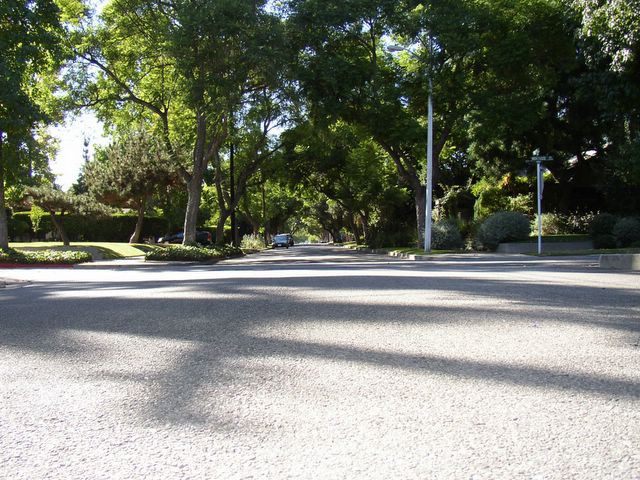
This past weekend, my girlfriend and I took a Sunday afternoon drive to South Pasadena. We used information from another fan’s website as our guide. We started on the east side of town (not far, I noted, from a shabby looking old theater that is screening Poltergeist), at the intersection that establishes the setting of the film - the corner of Montrose Avenue and Oxley. A few blocks up Montrose, we saw the hedge that features prominently in an early scene in the film, when Laurie and Annie are walking home from school and Laurie sees Michael Myers for the first time.

Following Oxley several blocks west, we visited the house that played as Laurie’s home. The north side of this house is seen in the early part of the film, when Laurie goes to drop off the key at the Myers house. Today, the house is a different color, but still recognizable.

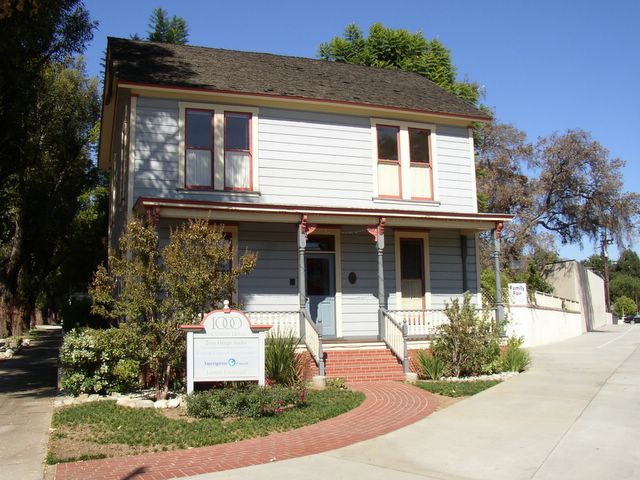
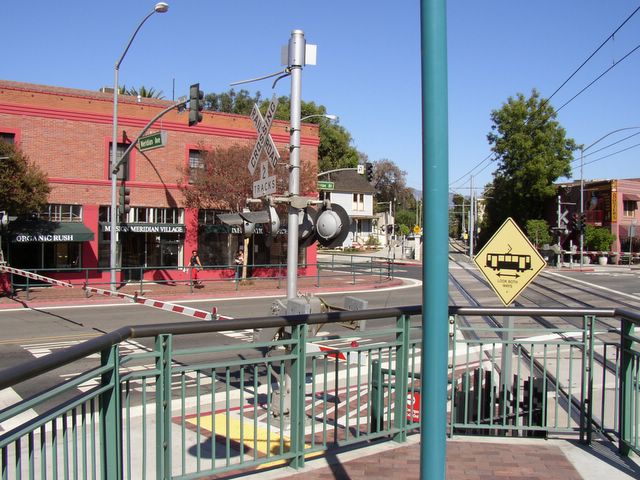
A few more blocks to the northwest is where most of the filming in South Pasadena took place, near the corner of Mission Street and Meridian Avenue. In 1978, when the film was shot, the Myers house stood at 709 Meridian Avenue. Several years ago, all of the houses on that side of the street were demolished. The structure at 709 was saved and moved south, to the opposite side of the street. It now stands at 1000 Mission Street, behind the train tracks. Nearby, on the same side of the tracks, is a brick building that played as the hardware store where Michael Myers steals his mask.

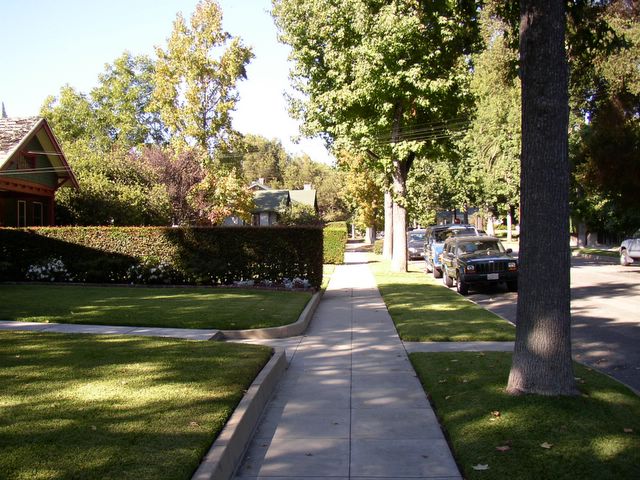
Further up Meridian Avenue... Laurie met Tommy at the corner of Meridian and Magnolia, just above the 700 block. Further north, above freeway 110, Laurie and her friends saw Michael Myers driving on Highland Street, between Meridian and Fairview Avenue (and Annie yelled, "Hey creep... Speed kills!").

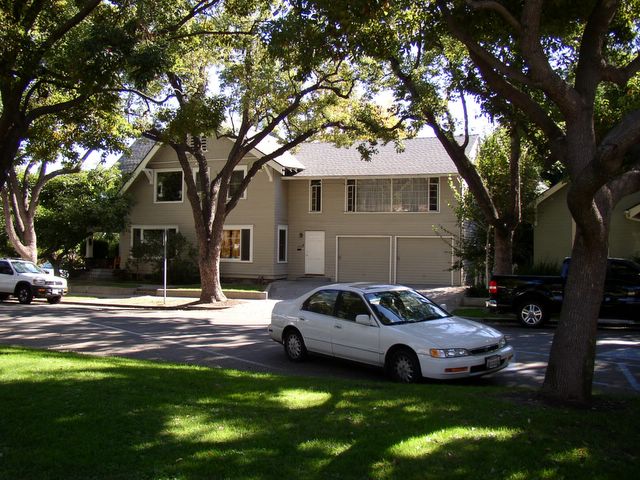
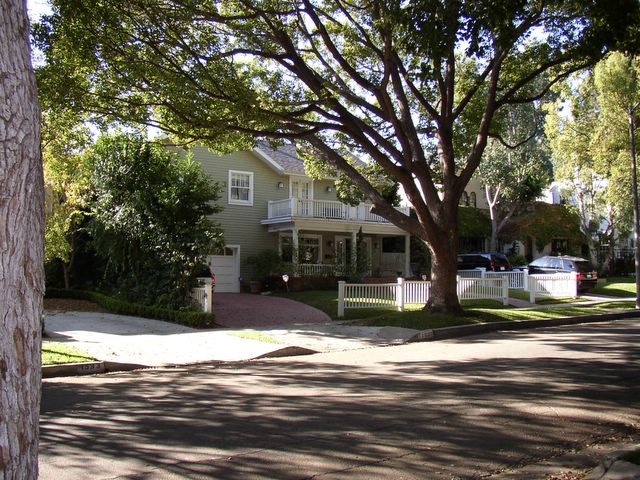
After our walking tour of South Pasadena, we drove back to L.A. to hit two more shooting locations. In Hollywood, between Hollywood Boulevard and Sunset Boulevard, there is a peaceful, seemingly suburban stretch of North Orange Grove Avenue (one street over from Fairfax). Here we found the two houses in which Michael Myers stalked Laurie and her friends. On the east side of the street, at 1530, is the Doyle residence where Laurie was babysitting. It has a new front door, but looks mostly the same. Diagonally across the street, at 1537, is the Wallace residence where Laurie’s friends were killed. This house has undergone extensive remodeling in the past two and a half decades. An addition on the left hand side makes it almost unrecognizable.

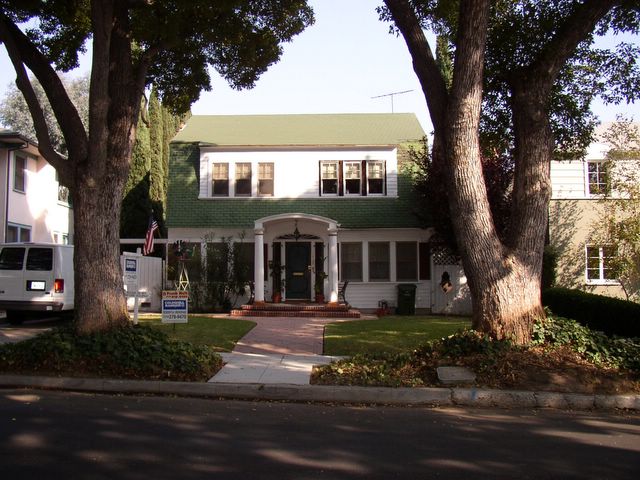
An added bonus: Two streets over, we discovered that Freddy Krueger’s house isn’t really on Elm Street. The house where Nancy lived in A Nightmare on Elm Street stands at 1428 North Genesee Street. The house is currently for sale (I did write down the phone numbers if anyone's interested...), and it’s clear that it has seen better days. The chimney on the north wall is crumbling, and a fair amount of rotted wood is visible around the upstairs windows. Unless a fan of the film decides to buy it, this house will probably be demolished before too much longer.

Credit where credit is due: I would have never found the Elm Street house if it hadn’t been for an article that appeared in the L.A. Times last week. Another obsessive horror movie fan named Hugo Martin wrote the article about various locations in and around Los Angeles that he thought would make good Halloween weekend tourist destinations. Among them: Bronson Caves in the Hollywood Hills (seen in the 1956 version of Invasion of the Body Snatchers, Robot Monster, and It Conquered the World), Malibou Lake (seen in the 1931 Frankenstein, The Bad Seed, and The Ring), Leo Carrillo Cave (a favorite filming location of Roger Corman), Red Rock Canyon State Park (seen in the 1932 The Mummy, and Jurassic Park), Hermosa Beach Community Center (site of the prom in Carrie), and… for real die-hard fans of the genre… the old zoo cages in Griffith Park, featured in Zoltan: Hound of Dracula.

For those who would rather stay in on Halloween, and need some offbeat movie suggestions, I recommend a new book called Minds of Fear: A Dialogue with 30 Modern Masters of Horror by Calum Waddell, which has already introduced me to a few overlooked gems (including the 2002 British shocker My Little Eye) and forced me to reevaluate several others.

HAPPY HALLOWEEN!!!


"Haddonfield, Illinois. October 30, 1978"
(South Pasadena, California. October 22, 2006) Posted by Picasa


The Hedge on Montrose Avenue Posted by Picasa


Laurie's house at the corner of Oxley and Fairview Posted by Picasa


The Myers House Posted by Picasa


The Hardware Store at the corner of Mission Street and Meridian (with the Myers house behind it) Posted by Picasa


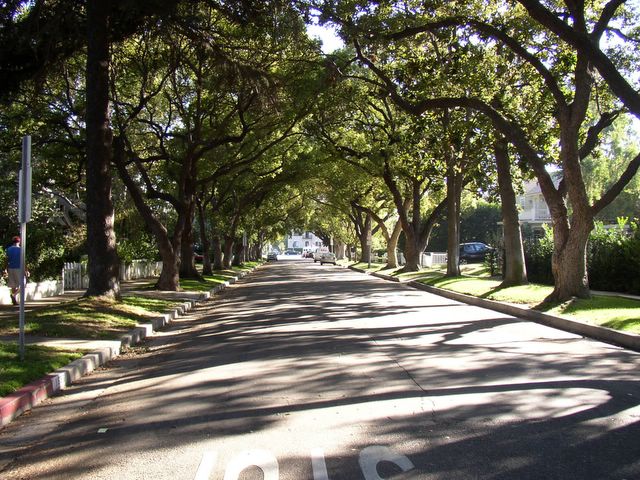
700 block of Meridian Avenue, looking north. The Myers house stood on the left side of this street, where a community of brand new condos exist now. Posted by Picasa


"Speed Kills" (Highland Avenue) Posted by Picasa


North Orange Grove Avenue, looking south toward Sunset Posted by Picasa


The Doyle House from Halloween Posted by Picasa


The Wallace House from Halloween Posted by Picasa


Elm Street / North Genesee Street Posted by Picasa


Nancy's house from A Nightmare on Elm Street Posted by Picasa