There are quite a few conflicting accounts of Hollywood’s
“discovery” of Monument Valley.
According to John Ford’s biographer Dan Ford: “John had first heard about Monument
Valley from Harry Carey, who had stumbled into it while exploring the Navajo
country in the 1920s. No other
film company had ever worked there, and John had been waiting for years
for a chance to do so.” Later, John Wayne took the credit,
telling biographer Maurice Zolotow in 1974: “I was the guy who found Monument
Valley. And I told Ford about this
place.” In Where God Put the West, author Bette L. Stanton sets the record
straight: George B. Seitz was the first filmmaker to shoot in Monument Valley
(when he made THE VANISHING AMERICAN in 1925), and Harry Goulding was the man
who introduced John Ford to Monument Valley in 1938.
For years, Goulding and his wife were the only private land
owners on the vast Navajo reservation.
They built a small trading post at the bottom of Big Rock Door Mesa, won
the trust of their native neighbors, and eventually convinced the Navajos that
they could all make a better living by trading in scenery. With the help of Arizona Highways photographer Josef
Muench (whose work is featured prominently in K.C. DenDooven’s book Monument Valley: The Story Behind the
Scenery), Goulding pitched the location to Ford and producer Walter Wanger,
who were then mounting their production of the epic western STAGECOACH. Despite the awe-inspiring
scenery, Monument Valley wasn’t an easy sell.
Wanger didn’t want to his cast and crew to be so cut off from Hollywood
(at the time, there weren’t even any paved roads into Monument Valley). Ford, however, loved the idea and eventually got what he wanted -- his own mini-Hollywood in the desert. STAGECOACH made Monument Valley (and of
course John Wayne) a star, and the filmmaker happily returned many times. With MY DARLING CLEMENTINE (1946), FORT
APACHE (1948) and SHE WORE A YELLOW RIBBON (1949), he transformed the landscape
into an iconic vision of the historic American West and put Monument Valley on
the map for generations of international tourists. In the process, he also provided work for generations of Navajo
natives, who still graciously share their land and their culture with us.
Goulding's
John Wayne's cabin from SHE WORE A YELLOW RIBBON
View from Goulding's Lodge
Monument Valley
John Ford's Point in Monument Valley
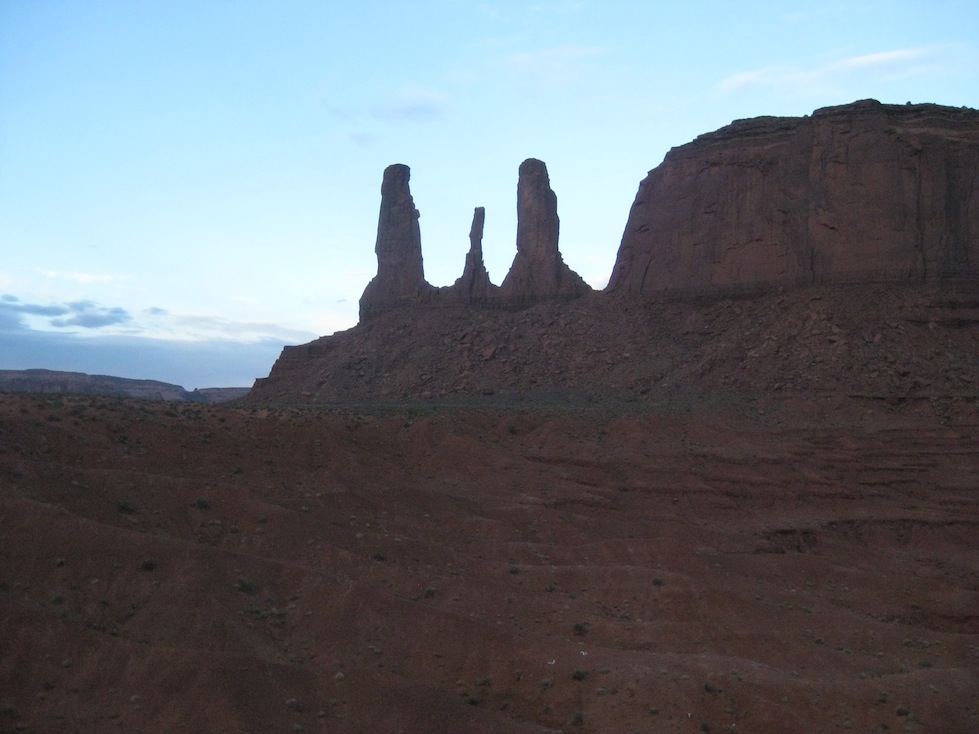
Three Sisters
Desert Window
Rain Gods
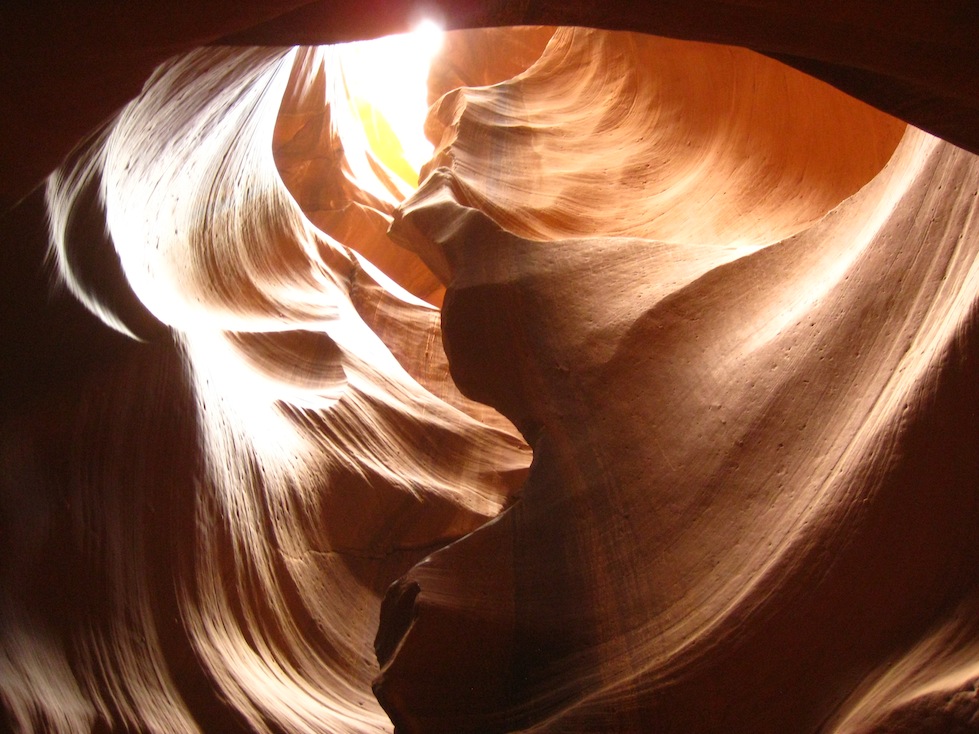
Desert Eye
That wasn’t the end of Ford’s legacy in the desert. In 1950, he asked cattle rancher George
White to help him find a location for his next film WAGON MASTER. White took the filmmaker on a tour of
Moab. When
they reached the gravel bar at Nine Mile Bottom on the Colorado River, looking toward Professor Valley and Fisher Towers, Ford knew he had found what he was looking for. WAGON MASTER is not one of Ford’s best
known films -- it’s an intimate story of Mormon settlers rather than an epic
story of soldiers or gunslingers, and it doesn’t feature John Wayne -- but it
was one of the director’s personal favorites, and it proved to be a boon for the nascent
Moab-Monument Valley Film Commission.
Moab's answer to Monument Valley
Professor Valley ranch land
Fisher Towers
Onion Creek area
Red Cliffs Lodge
John Ford's view in Moab
The following year, Ford came back to Moab to make RIO GRANDE
with John Wayne. The director and
his star later returned to the Moab-Monument Valley area many times, to make THE
SEARCHERS (1956), SGT. RUTLEDGE (1960), THE COMANCHEROS (1961) and CHEYENNE
AUTUMN (1963). They certainly
weren’t the only filmmakers who fell in love with the place, but their use of the region was so
compelling that a lot of other filmmakers were intimidated by the prospect of
trying to make it their own. I’d
argue that Sergio Leone had the most success with his 1968
masterpiece ONCE UPON A TIME IN THE WEST, which brought Henry Fonda back to the
place where he’d once played Wyatt Earp.
In the 1980s, a number of independent filmmakers transformed
Moab into a science-fiction landscape.
When I happened upon the Movie History Museum at the Red Cliffs Lodge on
Highway 128 (a B&B built on the site where Ford shot much of RIO GRANDE), I
was surprised to find almost as much space devoted to these strange mini-epics as to
the classic westerns of Ford and Wayne. In addition
to SPACEHUNTER: ADVENTURES IN THE FORBIDDEN ZONE (1983), NIGHTMARE AT NOON
(1987), and SUNDOWN: VAMPIRES IN RETREAT (1988), the two that really caught my
eye were CHOKE CANYON (1984) and KNIGHTS (1992).
The former is an “eco thriller” starring Stephen Collins as cowboy
physicist who believes that he can turn sound waves into usable
energy... with the help of Haley’s comet. (Don't ask me - I can't explain it.) He’s at odds with a bunch of slimy businessmen who’d rather
use his favorite canyon as an atomic dump site. One of those slimy businessmen is played by none other than
Lance Henriksen... who has understandably blocked this film from his memory. For anyone who might be nostalgic about
lighthearted 80s sci-fi movies, CHOKE CANYON is diverting enough, but in my opinion the only real
highlight is Janet Julian. Also worthy of note is the fact that footage from the movie was used in the MTV video for “Silent
Running” by Mike & the Mechanics - one of the more memorable music videos
of the early 80s.
Janet Julian in CHOKE CANYON
Henriksen cuts a more imposing figure in KNIGHTS, which I
like to think of as the poor man’s CYBORG. Of course, I also think of CYBORG as the poor man’s
CYBORG.... Both films were directed by Albert Pyun, who makes his movies fast and cheap but somehow nevertheless compelling. Maybe a better way to characterize KNIGHTS would be as a rich man’s ROBOT MONSTER (1953). Whatever the case, there’s a soft spot in my heart for this
post-apocalyptic western fantasy about two humanoid robots fighting over the future of the human race.
The good robot is played by Kris Kristofferson, who pairs up with
kickboxing champion Kathy Long to hunt the megalomaniacal vampire robot played
by Lance Henriksen. It’s a ridiculous story, but I don't mind because everyone seems to be having fun -- in spite
of brutal shooting conditions.
Stanton’s book says that the temperature would often get well above 100
degrees, causing actors and extras to pass out from heat exhaustion. Perhaps that explains Henriksen’s
apparent delirium in his death scene, when he mumbles something incoherent
about being taken away on the wings of a black bird.
(When I interviewed him for Not Bad for a Human, I asked Lance if he
improvised this line... wondering if maybe it was an homage to Rutger Hauer’s death
scene in BLADE RUNNER... He said he didn’t remember.)
Lance actually joined me for the next part of my trip. After taking a tour of Monument Valley with an excellent guide from Sacred Monument Tours named JT (who told us some good stories about
Johnny Depp’s recent visit to Navajo country for the making of THE LONE RANGER), we headed north... Through Four
Corners, where we met some amazing local artists, including potter Bob Lansing... Past the turn for
Shiprock, a mountain that was holy to the Navajos until the Sierra Club profaned it in 1939 (also Wyatt Earp's apparent destination in MY DARLING CLEMENTINE a few years later)... Into the Colorado mountains, toward the
quiet town of Telluride. We had more business there of the post-apocalyptic sort. But that’s a story for another time...
Driving into Page, Arizona, is a surreal experience. Amidst miles and miles of open desert,
the last thing you expect to see is a giant body of water. The city of Page sits at the base of
man-made Lake Powell, and practically glows with its unique combination of
bright blue water and bright orange sandstone formations. Just north of the lake is Glen Canyon
National Recreation Area. Further
north and east is the Grand Staircase-Escalante National Monument. To the south
and east are the Navajo and Hopi Nations. In other words, this city is nestled in the hub of
some of the most vast and beautiful scenery in the American southwest. It’s hard not to feel a bit awe-struck
here.
So it should come as no surprise that this is where
Hollywood decided to re-tell THE GREATEST STORY EVER TOLD. The Biblical epic, starring Max von
Sydow as Jesus Christ and a young Charlton Heston as John the Baptist, began
filming while the Glen Canyon dam was still under construction in the early
1960s. According to James V.
D’Arc’s When Hollywood Came to Town,
the first shots were made at the Crossing of the Fathers site on Lake
Powell. A few years later, Heston
returned to Lake Powell... only this time it was known as the PLANET OF THE
APES. The opening scenes were shot
on the banks of Warm Creek Bay.
I found that the best way to see these sites was to
take a boat tour from Wahweap Marina.
The destination of that tour wasn’t too shabby either. After two hours on the meandering
“lake,” we entered a narrow cove and saw Rainbow Bridge, one of the seven natural
wonders of the world. This
230-foot-tall arch was created a few hundred millions years ago by a
combination of wind (on top) and water (underneath). To the Native Americans, it is a sacred religious site -- a
rainbow turned to stone. For that
reason, tourists are no longer allowed to pass beneath it. Regardless, the sight leaves one
speechless. (It was a very quiet
boat ride back to Wahweap Marina.)
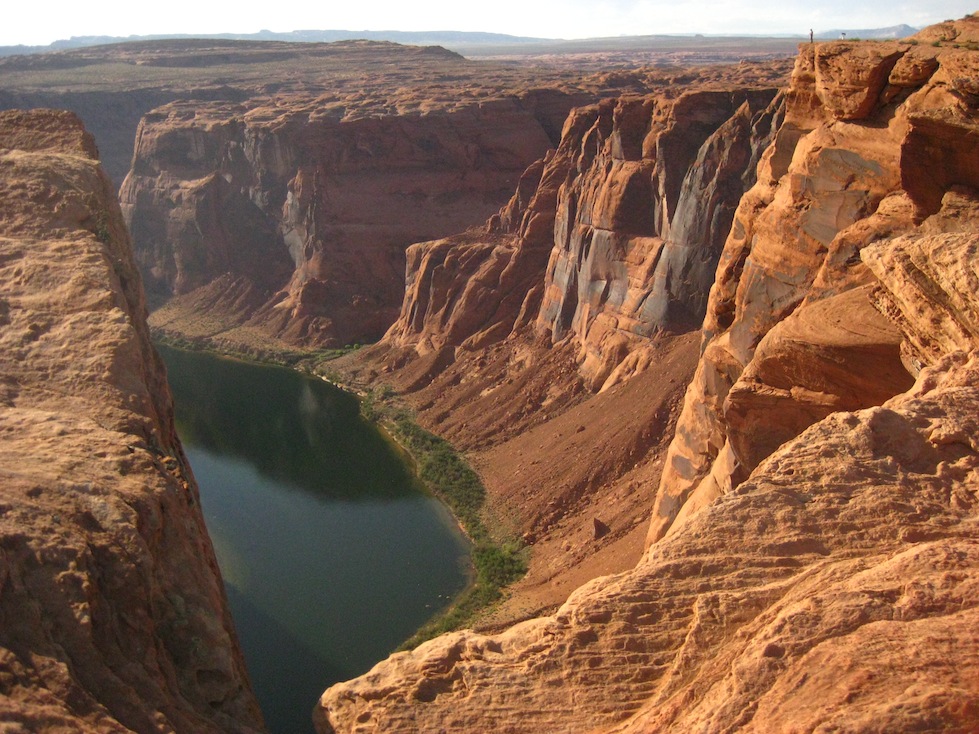
Just south of Page is another staggering work of nature: a
bend in the Colorado River that has produced a giant monolith. From the cliffs above the ancient
riverbed, it is frankly terrifying to look over the edge. The drop is roughly 1,000 feet. I found it almost impossible to
get a camera perspective on the scene that effectively illustrates the
scale. Only a couple of photos that
feature other visitors (one standing on the edge of the cliff, one in a tiny
boat on the beach below) give it the proper perspective. After looking up Horseshoe Bend
on Wikipedia, I realize that none of my photos captured its beauty.
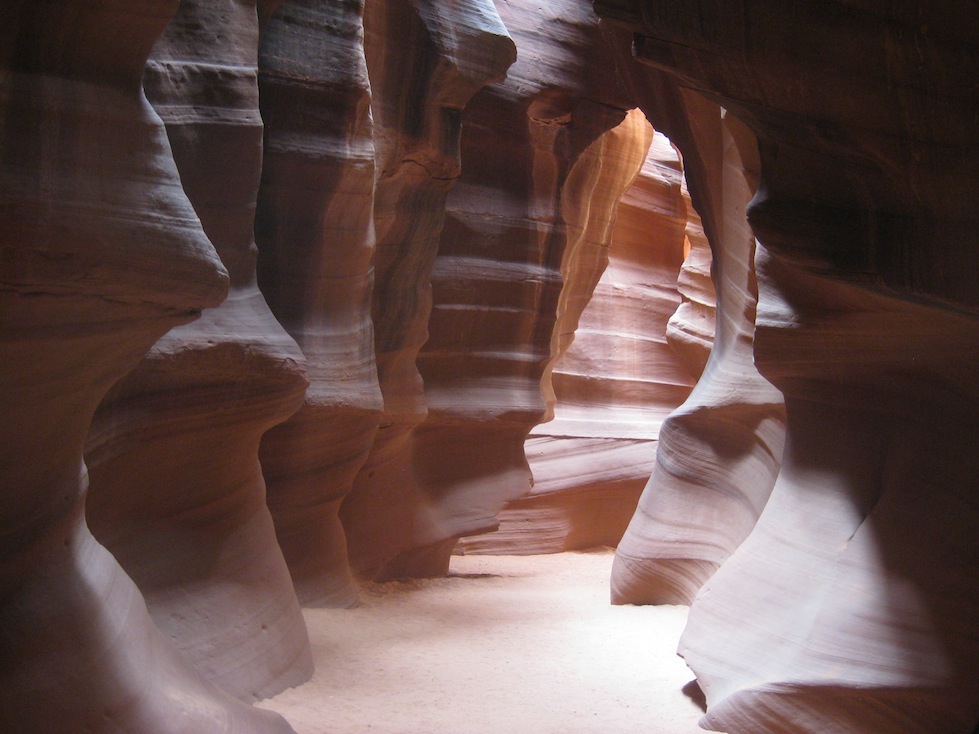
This was not, however, the most breathtaking thing I saw in
Page. My favorite part of last
week’s trip may have been a brief Navajo-led tour of Antelope Canyon. My tour guide Bonnie had an
obvious passion for the place, pointing out every significant feature she’d
ever noticed inside the narrow slot canyon, and even telling a few stories
about their meanings to the Navajo people. I learned that nature is never an object to the
natives. The sky, the trees and,
yes, even the rocks are every bit as alive as we are. Standing in Antelope Canyon, this was not at all difficult
to comprehend. On that note, maybe
I should let the photos speak for themselves.
Last year, my wife and I visited Zion National Park outside of St. George, Utah. It was a whirlwind trip (we were on our way home from Salt Lake City) and the weather wasn't the best -- it was hazy most of the time -- but I was still impressed with the silence and grandeur of the park at sunrise.
Last week, I returned to Zion. It was another whirlwind trip -- I was just passing through on my way from St. George to Kanab -- but I remain impressed. With its steep valley walls, Zion is a place that seems far removed from the rest of the world. The same is true of a half dozen sleepy towns that line the road just west of the park. I confess that one of these towns was the real reason I took this route again.
Grafton is nothing but a ghost town, founded by Mormon farmers in 1859 and abandoned by the 1930s. Amazingly, it has been perfectly preserved and protected by the residents of the neighboring town of Rockville. That made it an irresistable location for several Hollywood filmmakers, who came there to film THE ARIZONA KID in 1930, RAMROD (a noir western starring Joel McCrea and Veronica Lake) in 1947, and BUTCH CASSIDY AND THE SUNDANCE KID in 1968.
James V. D'Arc's book When Hollywood Came to Town offers a wealth of insight into the making of RAMROD, a surprisingly gritty western in which filmmaker Andre de Toth (who got the directing gig based on the personal recommendation of John Ford!) cast his wife Veronica Lake as a rugged cowgirl. De Toth is best known as the director of the 1953 horror film HOUSE OF WAX, starring Vincent Price, but his earliest films were westerns. With RAMROD, he was determined to make an ultra-realistic western that would break his wife out of her one-note "peekaboo" image. According to De Toth's biography, he had to convince producer Harry "Pop" Sherman to use the Zion area instead of Lone Pine, California, arguing that the latter was too postcard-perfect. He also had to browbeat his wife to get the performance he wanted out of her. The marriage didn't last, and both Joel McCrea and Veronica Lake later renounced the film in their respective biographies. D'Arc's book leads me to believe, however, that their disgust might have been based more on audience response to the film (several prominent Utah residents took to calling the film "Hamrod" after it was first released) than the quality of the actual picture itself.
BUTCH CASSIDY was shot in Grafton on the recommendation of Robert Redford, who by 1968 had practically adopted Utah as his home state. D'Arc quotes the actor as follows: "I've been driving through St. George since the mid-fifties... I had always liked the area very much - been drawn to it - and saw early on that it had great potential for filmmaking. They were initially going to film BUTCH CASSIDY in New Mexico. I got them to come and look at St. George and, of course, much of it was filmed there." In his book Cinema Southwest, John A. Murray adds some details about Grafton: "An abandoned adobe church in the ghost town was converted into a schoolhouse, and one other structure was built, but the rest of the landscape remained unchanged. The film was shot at this location in October and November of 1968, and the autumn foliage along the Virgin River was at its lovely peak - yellow cottonwoods, orange alders, and russet-red scrub oak (all against that chromium-blue Utah sky)... Viewers will note that the film has a washed-out, almost bleached quality - this results, according to the documentary [THE MAKING OF BUTCH CASSIDY AND THE SUNDANCE KID] from the cinematographer (who would also win an Oscar) regularly shooting into sunny, backlit landscapes: intentionally overexposing the film two or three stops; and introducing a lot of dust into the scenes to create a slightly hazy effect. Also, many shots of the actors are through objects - such as foliage - whcih makes the audience actively search for the characters, and also pay closer attention to the action and especially the dialogue."
The first time I saw the famous BUTCH CASSIDY bicycle scene shot in Grafton, set to the music of Burt Bacharach, I was struck by the sadly nostalgic light. In a way the entire film is sadly nostalgic, which is true of a lot of western movies during that time period. Murray calls them "anti-westerns," but I prefer to think of them as elegiac westerns. It would only be a few short years before traditional westerns were deemed box office poison, and places like Grafton became even further removed from the everyday world that most of us live in.