Showing posts with label Tobe Hooper. Show all posts

Sunday, January 16, 2011

MOVIES MADE ME #2: POLTERGEIST


Second title, and already a theme... Seriously, nobody grew up in the 1980s without being influenced by Steven Spielberg.

Of course, there's the old debate over whether or not POLTERGEIST is more of a Spielberg movie or more of a Tobe Hooper movie... John Muir has written (in his book Horror Films of the 1980s) that it's a Spielberg movie until Tangina (Zelda Rubenstein) announces "this house is clean"; after that the story veers off the rails into Hooper's more surrealistic head-space. This is a sound argument, but as I was watching the movie a few nights ago I kept thinking that POLTERGEIST is not quite so stylistically coherent.

First things first: POLTERGEIST is NOT a ghost story. The storytellers don't seem to know much of anything about the pseudo-scientific phenomenon known as poltergeist activity. Instead, this is a movie about aliens disguised as ghosts. It has all the child-like, other-worldly speculation of Spielberg's CLOSE ENCOUNTERS OF THE THIRD KIND or Tobe Hooper's INVADERS FROM MARS, but ghosts - instead of aliens - are providing the loose justification for the wide array of strange images and events. Even if you genuinely believed in ghosts, POLTERGEIST is pretty tough to swallow. The best way to approach the film may be to try and watch it the way a child would.

I was about seven when I saw POLTERGEIST for the first time, and film affected me just as powerfully as JAWS. In some ways, even more so... because JAWS (like CLOSE ENCOUNTERS OF THE THIRD KIND) is about a family that's separated by monsters. In JAWS, Roy Scheider pursues the shark even though he could have easily stayed at home with his wife and kids. (I'm with Gil Scott-Heron on this one.) In CLOSE ENCOUNTERS, Richard Dreyfus blatantly chooses aliens over his wife and son. In POLTERGEIST, however, Craig T. Nelson and JoBeth Williams do everything in their power to protect their children.

Of course, they're hopelessly outmatched... because the "poltergeist" in this movie can do anything and everything a 7-year-old's wandering mind can think of. Carol Anne's "TV People" not only stimulate hallucinations, rattle walls and move furniture... but they can also possess trees, conjure tornadoes, eject corpses from the ground, and turn an ordinary clothes closet into a magnetic Sarlac pit.

A few years ago I worked on a TV series about allegedly true ghost stories, and while I'm not going to suggest that everything in that show really happened, we did try to adhere to the popular theories about ghosts and demons that are espoused by paranormal experts. In POLTERGEIST, the only rule is that hauntings revolve around places (and can continue for years) while poltergeist activity revolves around people (and usually doesn't last very long). Based on the fact that a young girl has been ghost-napped, the experts in this film conclude that the family is dealing with poltergeist activity. Then, inexplicably, they start flip-flopping on whether or not it's a good idea for the lost girl (who has... what? dematerialized?) to "go into the light."

If memory serves, renowned ghost hunter and author Hans Holzer was the one who first claimed that poltergeist activity is the result of psychokinesis in pubescent girls (and occasionally boys). The thing is: Carol Anne, the little girl in POLTERGEIST, is pre-pubescent... and psychokinesis doesn't explain how she manages to disappear, via the family television set, into a parallel dimension... only to emerge days later from the living room ceiling like an aborted fetus from an alien spaceship. In several years of researching and talking to people about allegedly true experiences with ghosts and demons, no one even came close to telling me a whopper like this. (I wish they had, because we would have embraced it.) Reflecting on the film now, I'm reminded of Harlan Ellison's scathing review of BACK TO THE FUTURE, in which he lambasted the filmmakers for ignoring the most basic concepts of time travel. Paranormal investigators must feel the same way about POLTERGEIST.

Despite all of these problems, I can't be too hard on POLTERGEIST. This was a movie that really piqued my curiosity about death and the afterlife. I'm still captivated by the sequence in which Dr. Lesh (Beatrice Straight) tells Robbie about "the other side." Their entire conversation takes place in the dark, in whispers. Robbie, contemplating the idea of ghosts for the first time, worries that maybe the house is haunted by a bully from his school who got hit by a car. (You'd think that a kid who had just been half-ingested by a tree would already have bigger fears than bullies from school... but I digress.) Dr. Lesh calmly reassures him with stories about a "beautiful white light," while John Williams's music swells. It's pretty simplistic stuff, but that's the beauty of the thing. This scene is a supernatural variation on the boat scene in JAWS... it pulls us into a realm where anything is possible, if only for a moment.

As a 7 or 8 year old kid, it wasn't at all difficult for me to believe in man-eating trees, killer clown dolls, or the possibility that a person's entire face could melt off. (I had nightmares for weeks about that one.) Likewise, it wasn't difficult for me to believe in that white light. The beauty and the terror associated with "the other side" were all mixed up in my imagination, and they were - for the duration of the film - much more real than the world around me. Even now, I can't watch POLTERGEIST without re-experiencing a little bit of that childhood awe. I've had the same experience when visiting locations associated with the film - the neighborhood in Agoura Hills that doubled as Cuesta Verde, and the house in Simi Valley where the Freelings beat the devil.

I also recently visited the cemetery in Westwood where Heather O'Rourke, the actress who played Carol Anne, and Dominique Dunne, the actress who played Carol Anne's older sister, are both buried. Dunne was murdered just a few short months after POLTERGEIST was released in 1982. O'Rouke died tragically a few years later, during the making of POLTERGEIST 3. She was only 12 years old, and her loss traumatized the cast and crew. (You can read more about the trials of the production here.) Real-life tragedy aside, POLTERGEIST 3 was a troubling film because it separated Carol Ann from the family that literally went to hell and back to protect her in POLTERGEIST 1 & 2. Apparently, the filmmakers didn't realize that those earlier films worked precisely because of the family dynamic. The love of the parents for their children proved powerful enough to overcome fear and even death... and that's what I took away from that first viewing of POLTERGEIST.

The Pierce Brothers Memorial Park in Westwood is home to quite a few actresses who died young - including Marilyn Monroe, Natalie Wood and Dorothy Stratten. I visited the cemetery on a Saturday morning, and the place was crawling with movie fans in search of their favorite stars. With so many famous people buried there, the cemetery - like POLTERGEIST - inspires more wonderment than fear or sadness. Since none of us really knows what's on "the other side," that seems completely appropriate to me.


Thursday, July 26, 2007

Stephen King, Tobe Hooper and The Mangler

I’m going to do something a little ridiculous: I’m going to try to defend a film that is almost universally regarded as one of the worst horror films in recent memory. I’ll start with a confession: I was one of the twenty or so people who saw Tobe Hooper’s “The Mangler” during its short theatrical run. My best friend and I went to a Sunday matinee in Charlottesville, VA, on opening weekend. Based on our ticket numbers, we quickly realized that we were among only a handful of people in town who saw it during those first few days. The film was pulled from circulation before the following weekend.

The combination of three factors convinced me to buy that ticket – and I suspect the same was true for the other nineteen suckers who attended. First and foremost: Stephen King. I started reading Stephen King novels when I was in middle school, and made my way through his entire catalogue by the time I was a sophomore in high school. Suffice to say that I am a fan of his work, but not the kind of fan who refuses to admit that some of his stories are a little spotty. As for the films: There have always been more failures than successes. I watch them all anyway – because most of them have some redeeming qualities.

The biggest problem with the film adaptations is that they fail to render the characters with as much depth as the novelist. So filmmakers really have the odds stacked against them when they try to adapt a short story into a feature-length film. “The Mangler” is one of the short stories in the author’s “Night Shift” collection, so maybe I should have had lower expectations. But, hell, Tobe Hooper was in the director’s chair…

To this day, Tobe Hooper’s claim to fame is his debut film, “The Texas Chainsaw Massacre.” His first follow-up, “Eaten Alive” starring a young Robert Englund, was a pale imitation of that gritty Southern Gothic horror. His next film was “Salem’s Lot,” a TV miniseries based on King’s second novel. Though some of its potential was stripped by the restrictions of the medium, the miniseries was a solid effort that demonstrated the director’s mainstream potential. Throughout the 80s, he continued to turn out respectable films… but the 90s hit Tobe Hooper like a bomb.

For the most part, he survived on television. I remember a 1991 TV pilot called “Haunted Lives” that made a big impression on me… In fact, it was a lot like the Discovery show I worked on. By 1995, the director needed a hit to secure his future as a filmmaker. So he enlisted his buddy Robert Englund – who had recently retired the iconic character of Freddy Krueger (or so he thought) – to star in the latest Stephen King screen adaptation. Promotion was easy: three modern-day masters of horror, one movie. What could go wrong?

The original short story “The Mangler” was first published in Cavalier magazine in 1972, when King was just out of college. The setting came from the author’s own experiences – working in a blue-collar industrial laundry in rural Maine to pay his way through school – and the monster implied in the title is a massive speed-iron that was used in such sweat-shops. The story begins when a kindly old worker named Miss Frawley gets reduced to meat by the machine. Officer John Hunton, a burned-out cop with a guilt complex, investigates the death and discovers a trail of corruption that runs through the idyllic community of Riker’s Valley. It turns out that Miss Frawley is not the first one to be sacrificed to the machine. All of the town’s wealthiest and most influential citizens have sacrificed family members to it. As explained by Bill Gartley, owner of the Blue Ribbon Laundry, that is exactly what makes the community of Riker’s Valley thrive: a little blood to appease the pagan god.

The subtext is as pointed as it could be: American dreamers sacrifice the young and innocent to maintain wealth and power. The social elite build their fortunes on the backs of the disenfranchised working class. These are messages that haunted the young writer: King was raised in a working-class mill town by a single mother who juggled manual labor jobs, and never had much to show for it. King himself worked those same jobs (including one that became the basis for his short story “Graveyard Shift”) while attending college, where he led protests against the war in Vietnam. Like most of his friends and family, he was a member of the disenfranchised working class – meat for the machine – and the resulting rage was the subject of his earliest novels.

As critic Robin Wood has pointed out, the same subtext permeates “The Texas Chainsaw Massacre.” On one level, it is a story about what happens when workers at the bottom of America’s capitalist food chain are put out of work. Since the film was made and set in 1973, there can be little doubt that the war in Vietnam was also on the director’s mind. In the recent prequel “The Texas Chainsaw Massacre: The Beginning,” the filmmakers brought the subject of the Vietnam War to the surface of the story – perhaps because many Americans are currently comparing it to the Iraq War. They could have also drawn inspiration from Eric Schlosser’s “Fast Food Nation” – a vivid portrait of the dehumanizing effects of industrialization, and an indictment of contemporary American capitalism.

Considering the similarities to “Chainsaw,” I suspect that Tobe Hooper was trying to get back to his roots with “The Mangler.” There is at least one visual clue about this: He reveals the “mangled” bodies to us in the same cinematic style that he revealed the corpses to us in the opening scene of “The Texas Chainsaw Massacre.” The impression is the same: We have no illusion that we are looking at a person. What we are seeing is simply a piece of meat. Alive of dead, that’s all the characters in this film can be.

Perhaps for that reason, most of the factory workers and blue-collar characters in the film are angry – from our crippled, lecherous old villain Gartley (“We all have to make sacrifices”) to our “hero” John Hunton (“Life’s a bitch, then you die.”) Those who aren’t angry are filled with despair – from kindly old Miss Frawley (who pops pain pills like they’re candy) to J.J.J. Pictureman, the town’s crime scene photographer / mortician (who says he’s suffering from some vague terminal illness that is “eating him up inside”). We can hardly blame them. They spend all of their time in a dark, dirty factory on the edge of a town that is allegedly idyllic. They are all simply part of the machine. This reminds me of a line from Scottish poet James’s Thompson’s rant against industrialism, “The City of Dreadful Night”:

The world rolls round for ever like a mill;
It grounds out death and life and good and ill;
It has no purpose, heart or mind or will


But this is too poetic for “The Mangler.” Its characters do not recite poetry. They just bitch and moan and curse. That’s one reason why this movie is so easy to hate – because its characters are so easy to hate. I’ll bet Ted Levine hates himself (or at least his agent) for having to speak some of the ludicrous dialogue in this film. (He uses the phrase “miserable piece of dogf**k” at least twice.)

Perhaps the other big reason that the film is so easy to hate is that it sets us in a spirit-numbingly naturalistic world, then casually drops a supernatural demon into it. This, admittedly, is King’s doing – not Hooper’s. The demon is his way of turning an angry political diatribe into an entertaining horror story. And Hooper has no intention of downplaying the elements of his source material, even if what works on paper is comically surreal onscreen. The film goes for broke in the last act, when one of the most laughable exorcisms in screen history causes the mechanical monster to sprout legs and start chasing Ted Levine while spewing fire. You’ve got to see it to believe it.

So… with its intriguing subtext and its over-the-top ending, does “The Mangler” qualify as one of those “so bad it’s good” movies? Does it deserve this level of analysis? I think so. To me, it’s an interesting idea that doesn't quite work – but I still laughed, gagged, and even wanted to know more about the film’s most interesting character.

J.J.J. Pictureman, played by Jeremy Crutchley, tells Hunton that they “share the same demons.” This implies that both men are haunted by guilt over some tragedy in their past. We know about Hunton’s tragedy, but we never learn anything about Pictureman’s. I like to think that he was one of the town’s wealthy elite at one time. Maybe he’s even Gartley’s brother… that would explain why the two actors are made up to look so much alike. Whatever his reasoning, Pictureman pleads with Hunton to fight – to expose the corruption and evil that is thriving beneath the picture-perfect surface of things. That makes him the real spokesman for King and Hooper’s angry message. Too bad he wasn't the main character.

As an afterthought, I have to add that Hooper and Robert Englund really redeemed themselves with their first-season episode of Showtime’s Masters of Horror, “Dance of the Dead.” This post-apocalyptic short film has all the nihilism of the best horror films of the 1970s, and reminds me of another Stephen King short story called “Night Surf,” which revolves around a group of hopeless teenagers who have seen civilization get wiped out by a deadly plague. The episode doesn’t go down easy, but it stays with you – and that’s what good horror stories are supposed to do.

Wednesday, July 04, 2007

Happy 4th!

Everybody has their own way of celebrating the 4th of July. I decided to forego barbecues and ballgames, and seek out the shooting location of the 1982 horror film “Poltergeist.” A few months ago, I wandered through Agoura Hills – where the neighborhood establishers were shot – but couldn’t find the main house. Turns out that the Freeling home didn’t implode… It’s just further north, on the far edge of Simi Valley.


Recently named one of the top ten safest cities in the U.S., Simi Valley is known mostly as the home of the Ronald Reagan Presidential Library and the setting of the Rodney King trial. It’s also the unofficial home of the old Hollywood gunslinger: hundreds (some say thousands) of westerns were shot in the surrounding hills – many of them on movie ranches near the Santa Susana Pass. After I took photos of the "Poltergeist" house, I decided to head that direction.

My first stop was Corrigan Park, named for Ray “Crash” Corrigan, who purchased approximately 1,900 acres of land here in 1937, and opened it up to Hollywood filmmakers. In the following years, the Poverty Row studios (RKO, Columbia, Republic, Monogram, PRC) made dozens of low-budget westerns on the property, prompting Corrigan to build a mock mining town on the ranch in 1942. A few years later, a small village was built nearby for the 1946 Howard Hughes film “Vendetta.” One year after that, 20th Century Fox built sets for John Ford’s “Fort Apache,” starring John Wayne, Henry Fonda and Shirley Temple.

In the 1950s, the ranch was opened to the public as an amusement park. It remained in business until 1965. By then, fewer westerns were being shot on the premises – both because the popularity of the genre was waning, and because the ranch no longer had the same sweeping vistas. In 1966, the Simi Valley Freeway was built right through the middle of the ranch. That same year, no-budget filmmaker William Beaudine provided two onscreen death gasps: “Billy the Kid vs. Dracula” and “Jesse James Meets Frankenstein’s Daughter.”

Sadly, all of the movie sets that were on the property have since been dismantled or destroyed by fire. Only about 200 acres of the original 1,900 acre ranch are currently accessible to the public… but they include the shooting locations of “Vendetta” and “Fort Apache.”

View from above "Vendetta Village," looking south

View from above "Fort Apache," looking west


Former site of Spahn Ranch, at the corner of Santa Susana Pass and Iverson Road

Further east on the Santa Susana Pass are the sites of two other noteworthy ranches: Spahn Ranch and Iverson Ranch. Spahn Ranch was the setting of only a handful of films – including Al Adamson’s unmemorable “The Female Bunch” – but it gained notoriety as the hideout of the Manson Family. Today, the property belongs to the Church at Rocky Peak… and they are not especially welcoming to morbid curiosity-seekers. Just as 10050 Cielo Drive (the site of the Manson Family murders) was demolished, Spahn Ranch has essentially been wiped off the map.

Iverson Ranch
has a much more welcoming reputation. As a filming location, it predates Corrigan Park by more than two decades, and is allegedly “the most photographed location ranch in motion picture history.” Over the years, it played home to Tarzan, The Cisco Kid, The Lone Ranger, Batman, Superman… It was also the site of Roger Corman’s directorial debut, “Five Guns West.”

The ranch was subdivided among subsequent generations of the Iverson family, and much of it was sold to real estate developers. The most recognizable portion of the original movie ranch – known as “The Garden of the Gods” – has been preserved by the Santa Monica Mountains Conservancy.


Lower Iverson

Garden of the Gods

Monday, November 27, 2006

Plastic Fantastic Universal Studios

This weekend, L. and I went to Universal Studios... which made me question whether or not I’m too old to truly appreciate amusement parks. When I was a kid, I loved going to King’s Dominion and Busch Gardens in Virginia – my family would buy season passes, and we’d go every other week throughout the summer. I was a little disappointed to find that, at Universal Studios, there is nothing to compare with the rollercoasters at King’s Dominion or Busch Gardens. The Revenge of the Mummy rollercoaster is too short, and the Jurassic Park water ride is tame by comparison.
The main attraction for me, of course, was the studio tour… but I have to say that I have much prefer self-designed tours of random shooting locations in and around Los Angeles. Just this past Friday, I went to visit a friend in Agoura Hills and made a detour through the neighborhood where they shot exterior establishers for Poltergeist. (The main house is in Simi Valley.) As I wandered, I could practically hear the theme song in my head. On the edge of the neighborhood, there was also a random shooting location from Phantasm. Being there made the movies seem more real.
I learned about these locations from a guy named Sean Clark, who runs a website called “Horror’s Halloween Grounds.” He writes: “When we as fans visit these locations it is not unlike returning to a childhood home we haven’t seen in decades. They hold a special place in our lives. A piece of nostalgia from a classic moment in time. Even though you may have never been there before, you feel at home.”

I saw Poltergeist for the first time when I was seven years old and my mother was in the hospital. That movie scared the bejesus out of me. I still remember sitting in a darkened room while the credits rolled across the screen, listening to that ethereal theme music and feeling completely disoriented, as if I was only half awake. I knew that the things that happened in the movie couldn’t really happen… but scary movies served as a safe, friendly reminder that bad things could happen. Oftentimes, when people ask me why I like horror movies, I think of that particular time when I was learning to cope with the realization that bad things could happen. Driving through the neighborhood of Agoura Hills (called Cuesta Verde in the movie), I remembered how real the movie had been for me when I saw it for the first time.

I had a completely different reaction to the Universal tour. The back lot made everything seem fake. You may be protesting: "Of course it seemed fake. Sets on a back lot are fake." Often, they’re just wood and foam façades – one or two sides of a building, with nothing behind them. This came as no surprise to me, but it was still a little disappointing to imagine some of my favorite films being shot in such a sterile environment.

Universal films have always been known for their grandeur. When Carl Laemmle founded the company during the silent film era, he aspired to create “the entertainment center of the world.” The studio’s first major success was the extravagant Lon Chaney feature The Hunchback of Notre Dame (1923). They followed up with The Phantom of the Opera (1925), which necessitated the building of the first front lot stage (now known as #28). These two films became templates for the Universal monster movies of the 1930s – Dracula (1931), Frankenstein (1931), The Mummy (1932) and The Invisible Man (1933) – which kept the studio going strong through the Great Depression. Many of these horror films (as well as portions of the 1929 Best Picture All Quiet on the Western Front) were shot on the back lot’s “Little Europe,” which we passed on the tram tour. Sadly, the films were mentioned only briefly by the tour guide (“Hey look, there goes the Invisible Man…. Just kidding.”)
Despite the fact that the Psycho house and the Bates Motel loom large on the tour, they also got short shrift on the way to a much more “dazzling” sight: a suburban neighborhood devastated by a crashed airliner from the Tom Cruise vehicle War of the Worlds. We slowed to a crawl through that set, so I had to turn backwards to get decent photographs of Norman Bates’ home.

The tour organizers have obviously determined that most visitors would rather hear about newer blockbusters and television programs… Courthouse Square, made famous by Back to the Future, has been rendered unrecognizable for TV’s “The Ghost Whisperer.” The set on which Charlton Heston parted the red sea in The Ten Commandments is now little more than a storage place for miniatures from Peter Jackson’s King Kong. The home of “The Munsters” is now part of the suburban hell from “Desperate Housewives.” And then there’s Whoville… one of the most elaborate (and surely among the most hideous) sets ever created.

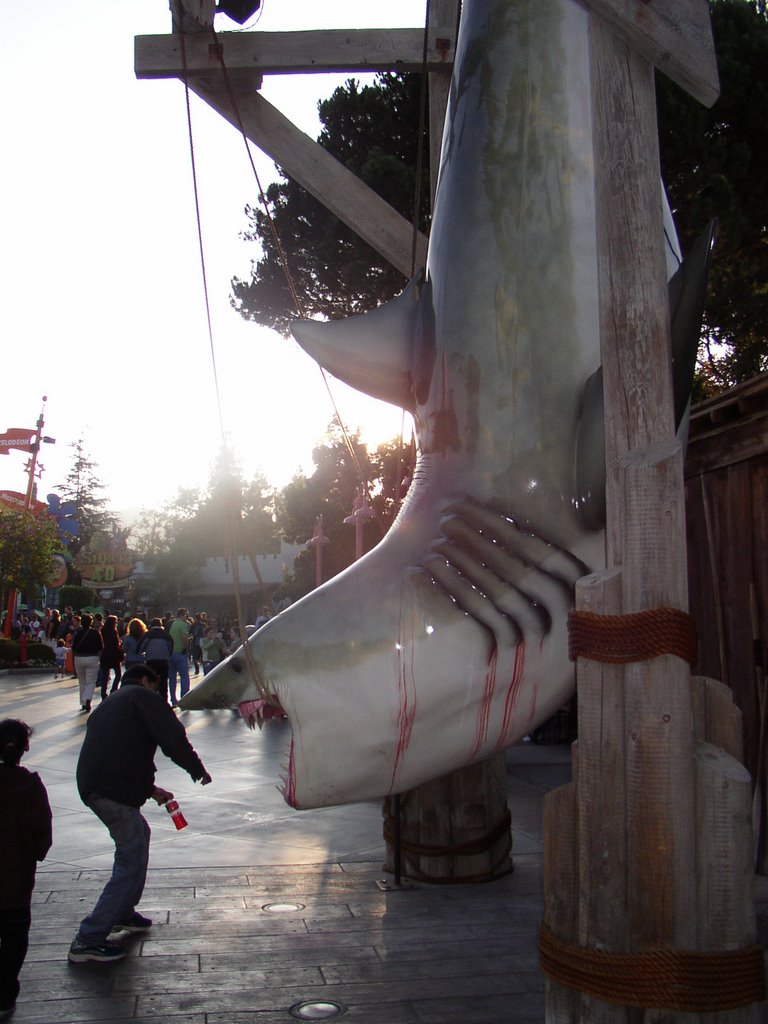
It was exciting to see Bruce the Mechanical Shark from Jaws in good working condition, after all the trouble he caused during filming. But then the tour guide gently informed us that this model of the shark was actually from Jaws: The Revenge.

That’s it, I thought, the bubble has been burst. Why mention a movie that nobody liked?
Universal goes to great lengths to immerse the casual visitor in the world of classic films – through the tour, interactive rides, actor lookalikes, and the constant blaring of familiar theme songs. But throughout the tour, I wanted nothing so much as to go home and watch the movies instead.
In the afternoon, we abandoned the amusement park and went to see the new James Bond movie. Somehow, this is the first time we’ve managed to make it to the cinema since we arrived in L.A. Even more shocking: This particular movie wasn’t a half-hearted effort at nostalgia. Daniel Craig actually manages to reinvent what had become a one-note character. (In my opinion, the new Bond has a touch of Steve McQueen.)

At the end of the day, I decided that I probably am too old to truly appreciate amusement parks - at least, the way I used to. I may also be too old to appreciate the current incarnation of the decades-old Universal tram tour... But I still had fun, mainly because I love being reminded of just how real some movies are to me. Even the actual locations and actors who brought a story to life don’t seem as real as the films themselves, because those fictional worlds have taken on a completely independent life in my memory.

That’s the magic of Hollywood.

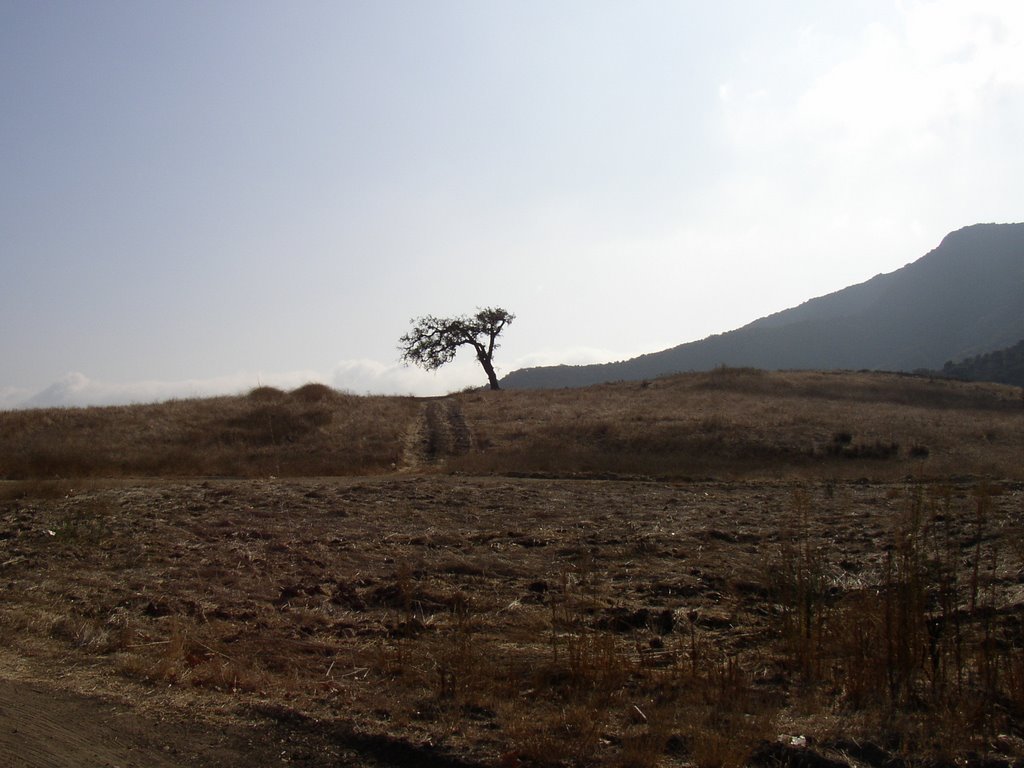
The Hanging Tree - from "Phantasm"

Welcome to Cuesta Verde (Agoura Hills)

Welcome to Cuesta Verde (Agoura Hills)

In the foreground, you can see Universal's back lot. In the distance: Warner Brothers studio.

Universal Studios

... where you can ride the movies.


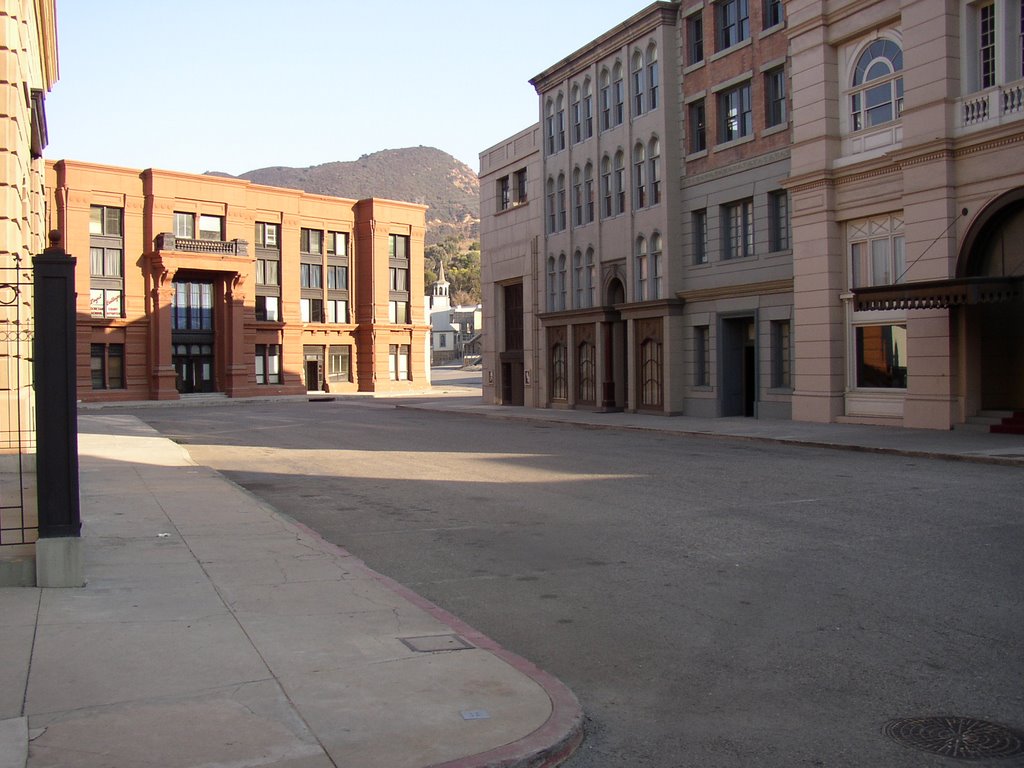
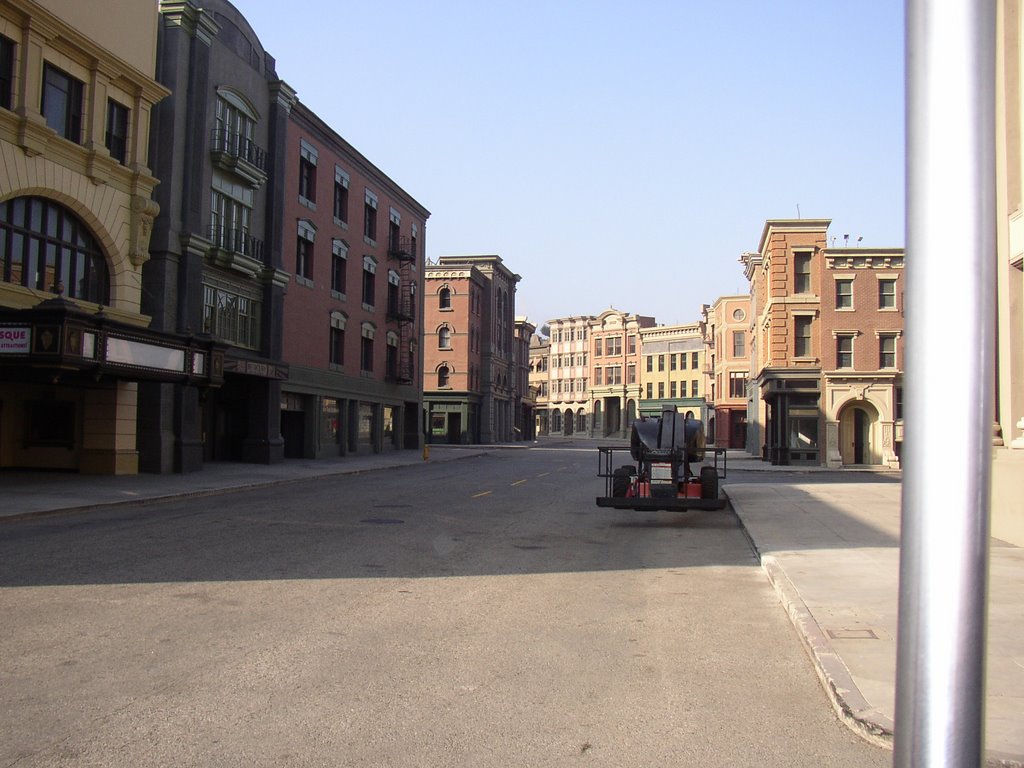
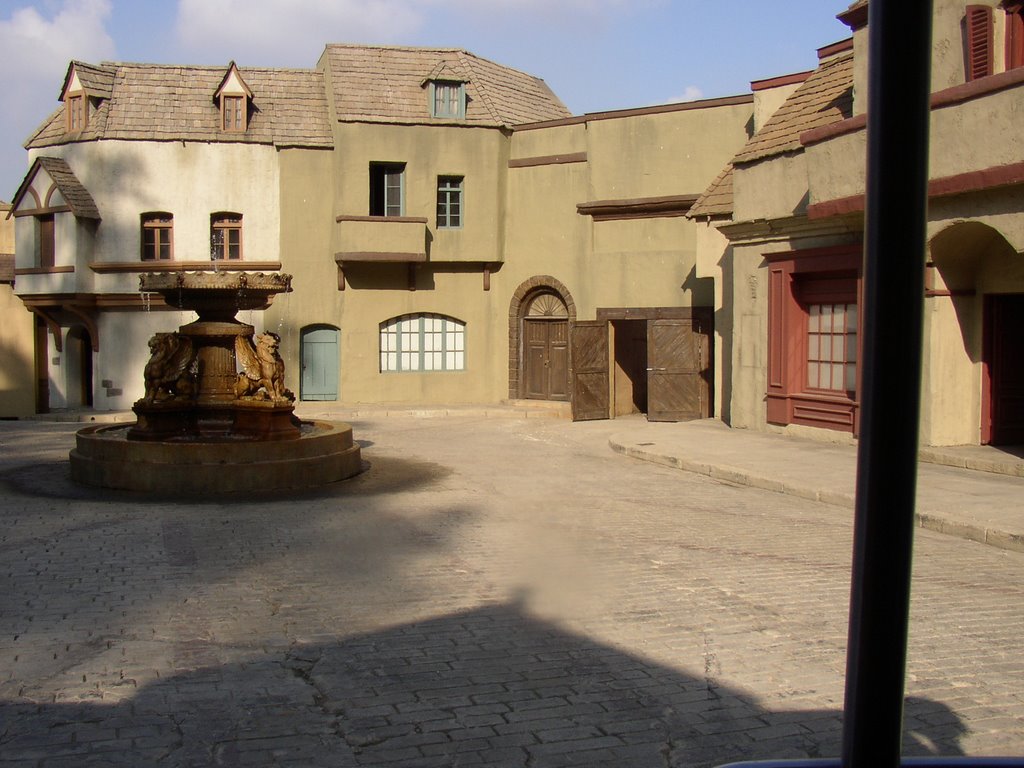
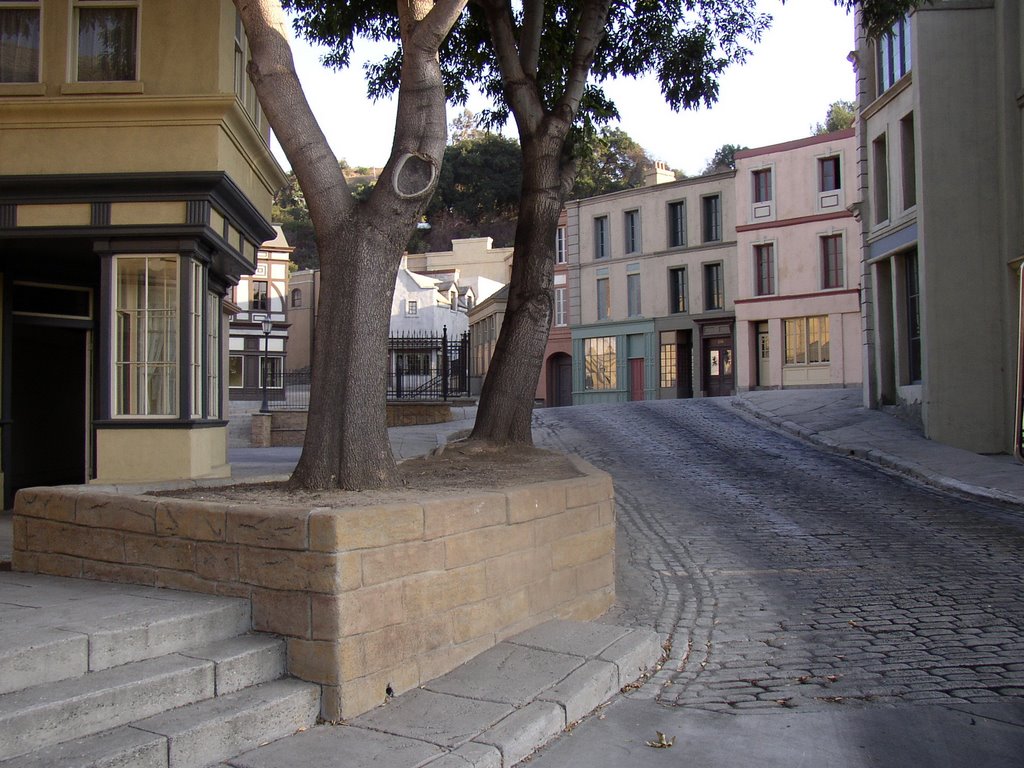
Brownstones, looking east

Brownstones, looking west

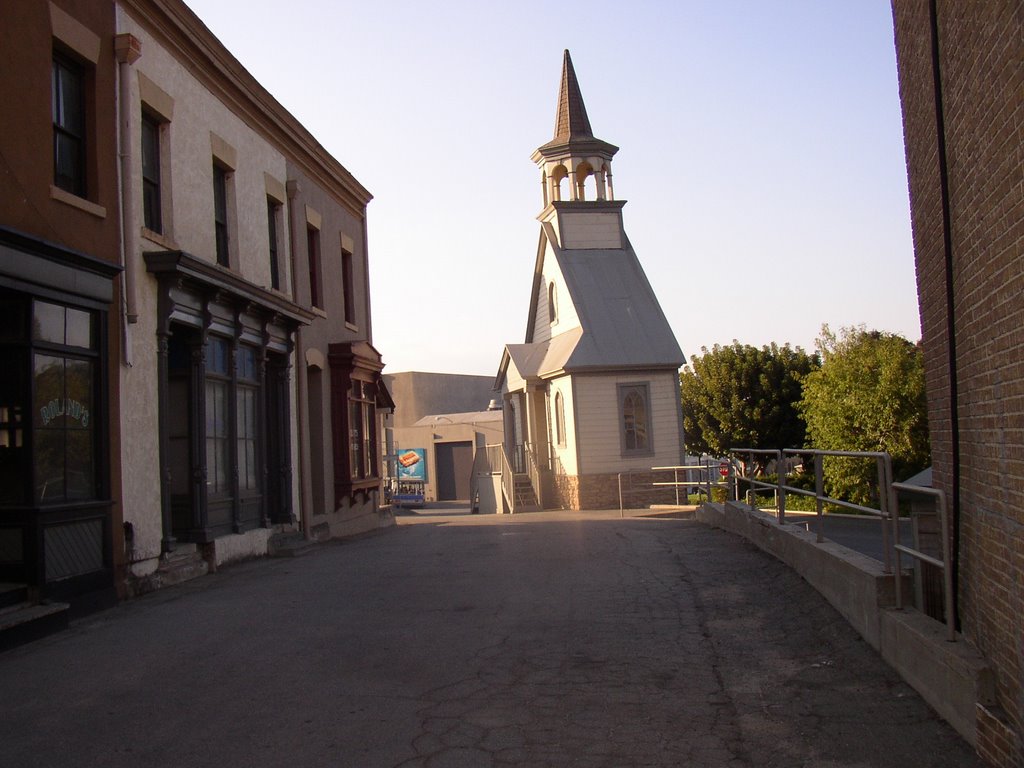
Church facade

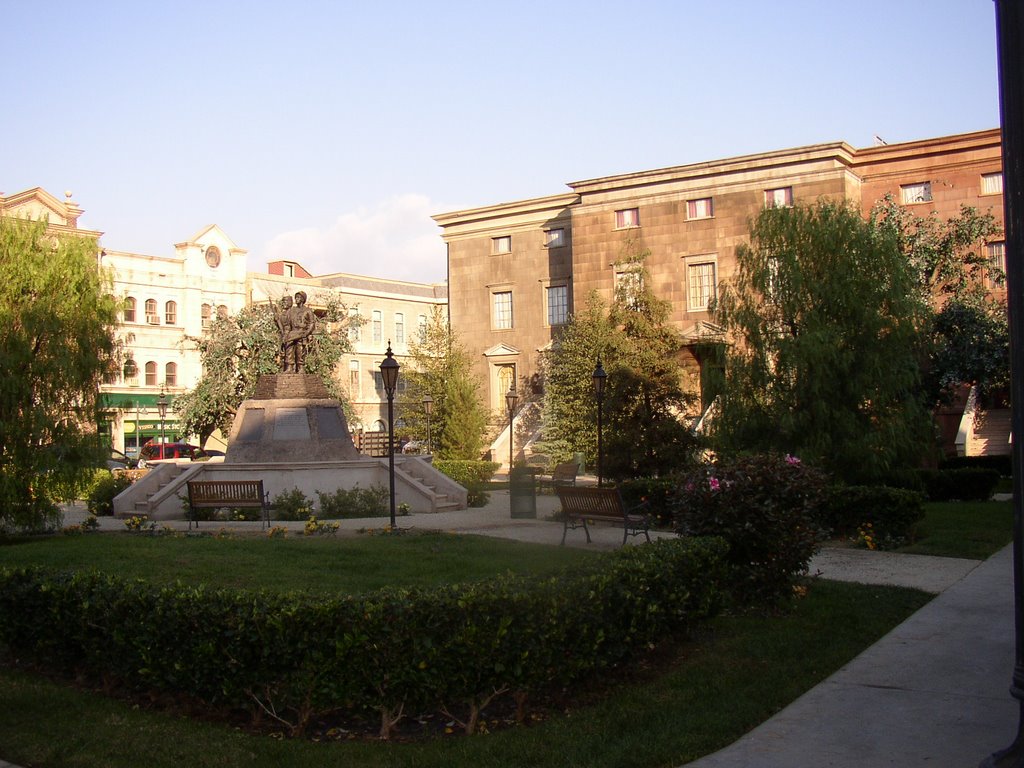
Town square from "The Hunchback of Notre Dame"

"Little Europe"

"Little Europe"

After the filming of "Psycho 3," the house and motel were restored to their appearance in the original film. The oblong monstrosity above the motel is part of Whoville from the live-action "How the Grinch Stole Christmas"

Bedroom window of Mama Bates

The airplane crash set from "War of the Worlds" is directly behind the "Psycho" house

The Courthouse Square from "Back to the Future" (clock tower absent from the main building on the right), dressed for "The Ghost Whisperer"

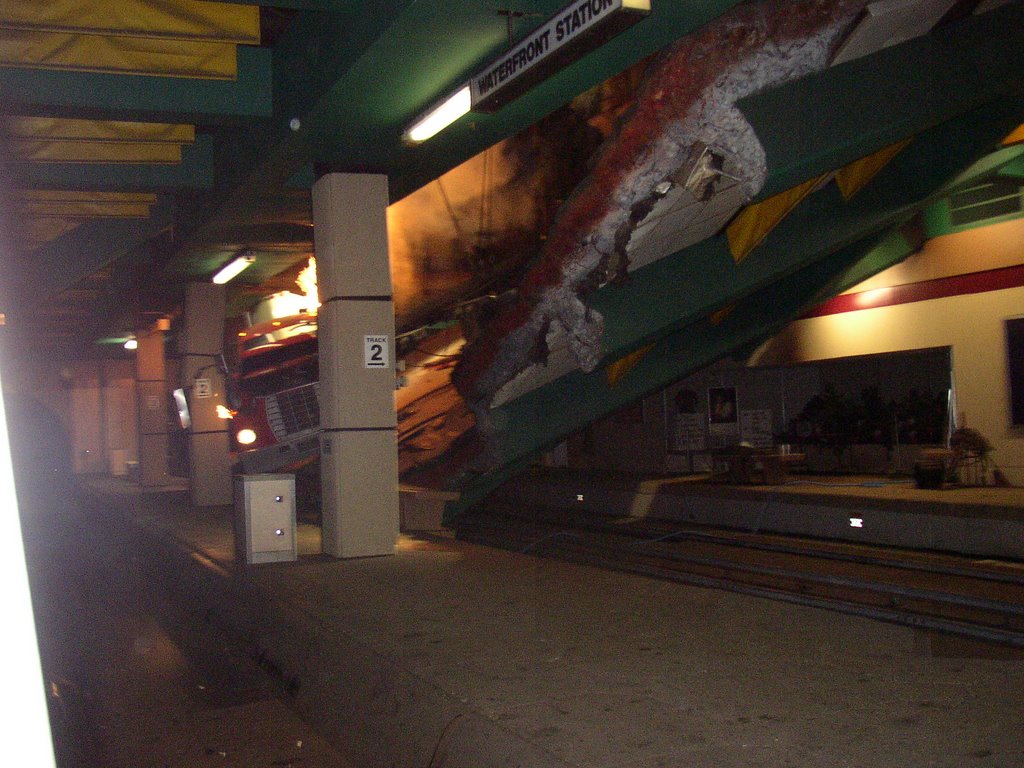
Stage 50 is rigged for earthquake special effects.

Stage 55 is rigged for exploding cars.

Just in case you don't know, this is a hovercraft from Joss Whedon’s “Serenity.”

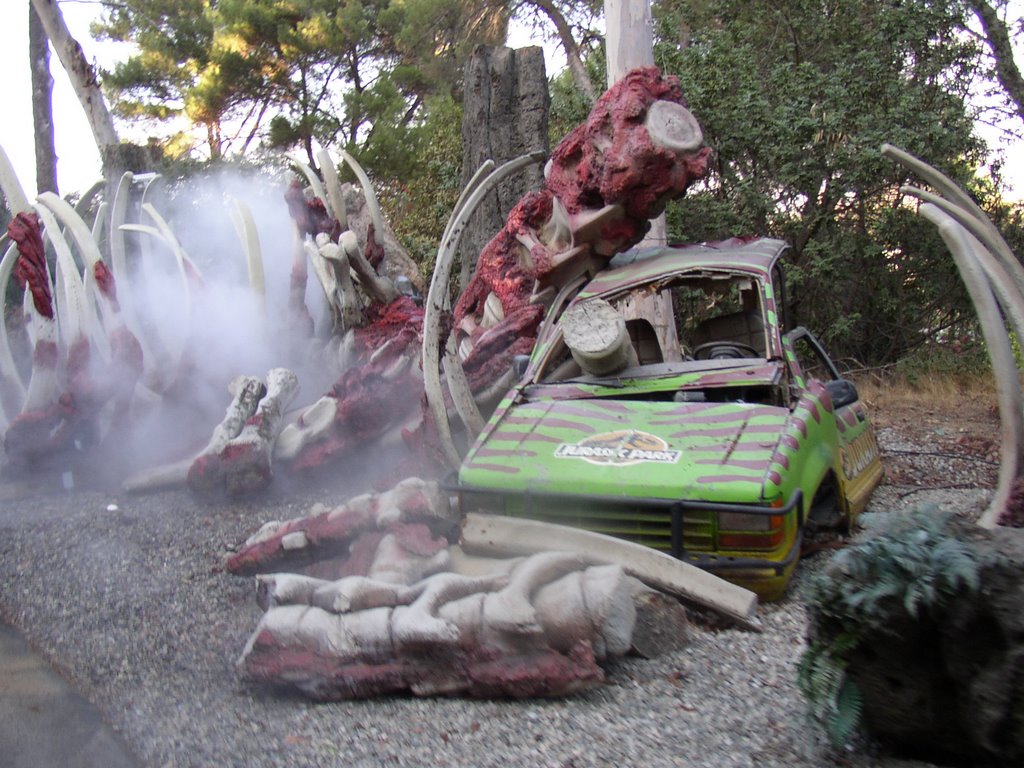
Our tour guide said that "Jurassic Park 4" is in the works.... but it looks to me like this franchise is pretty much played out.

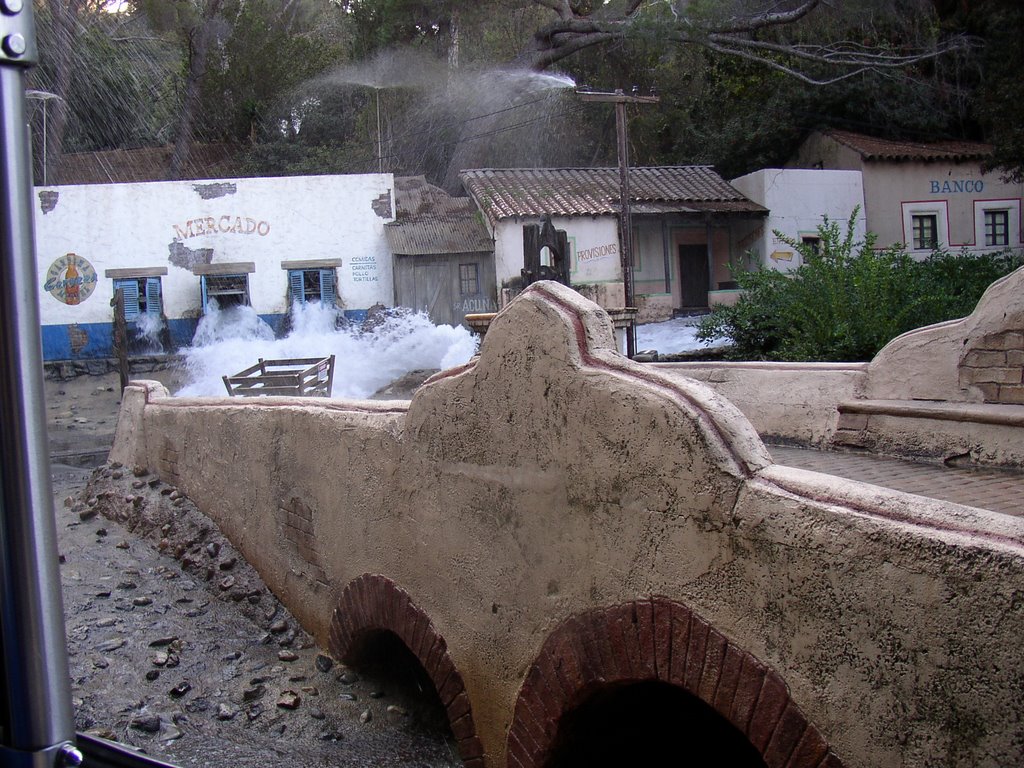
This is why I don't have very many action photos. One minute, you're in "Little Mexico" admiring the view....

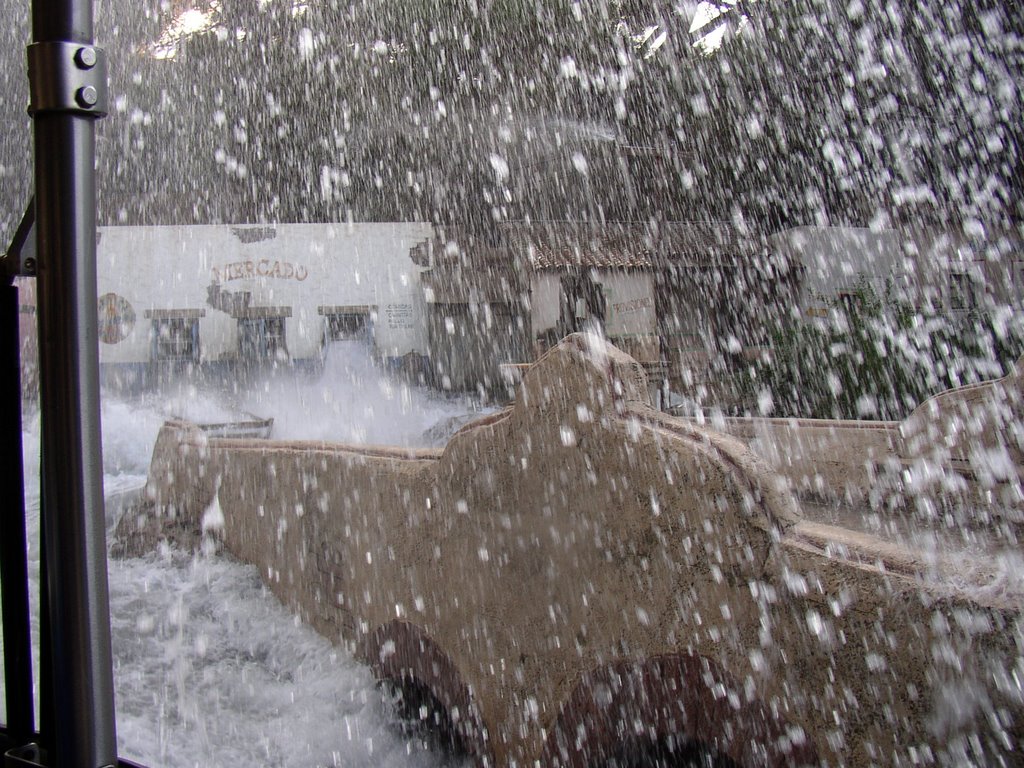
... the next minute, you're shielding your camera from flash flood waters that are headed directly for you...

It seems like every attraction at Universal Studios is designed to get you soaked.

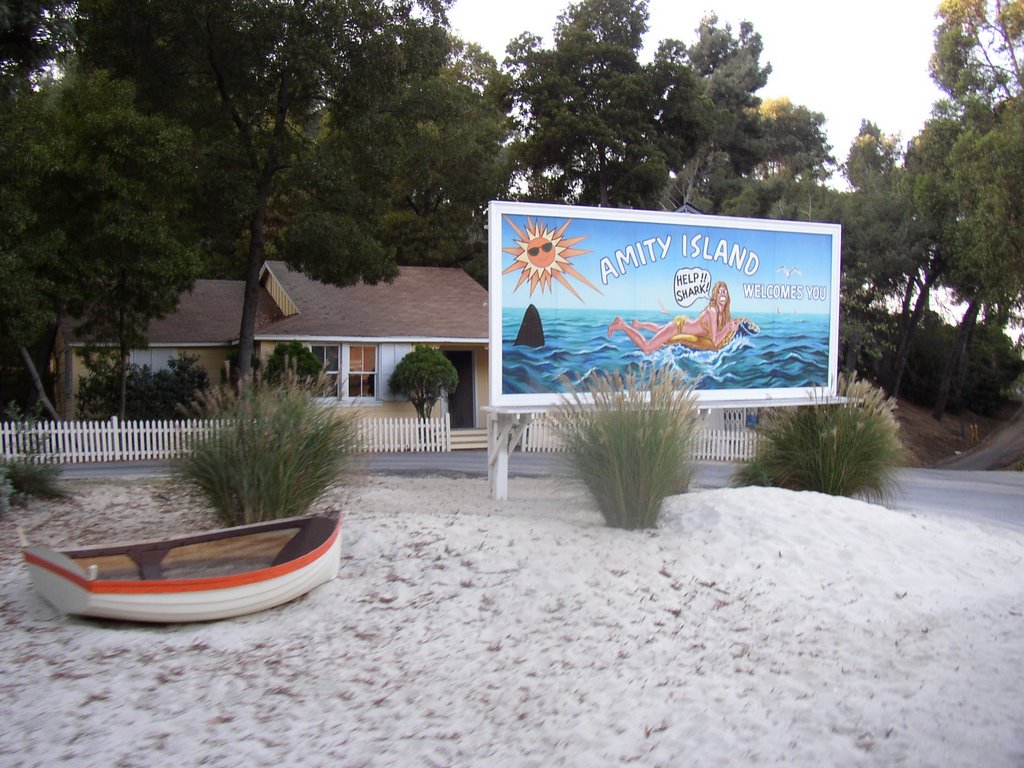
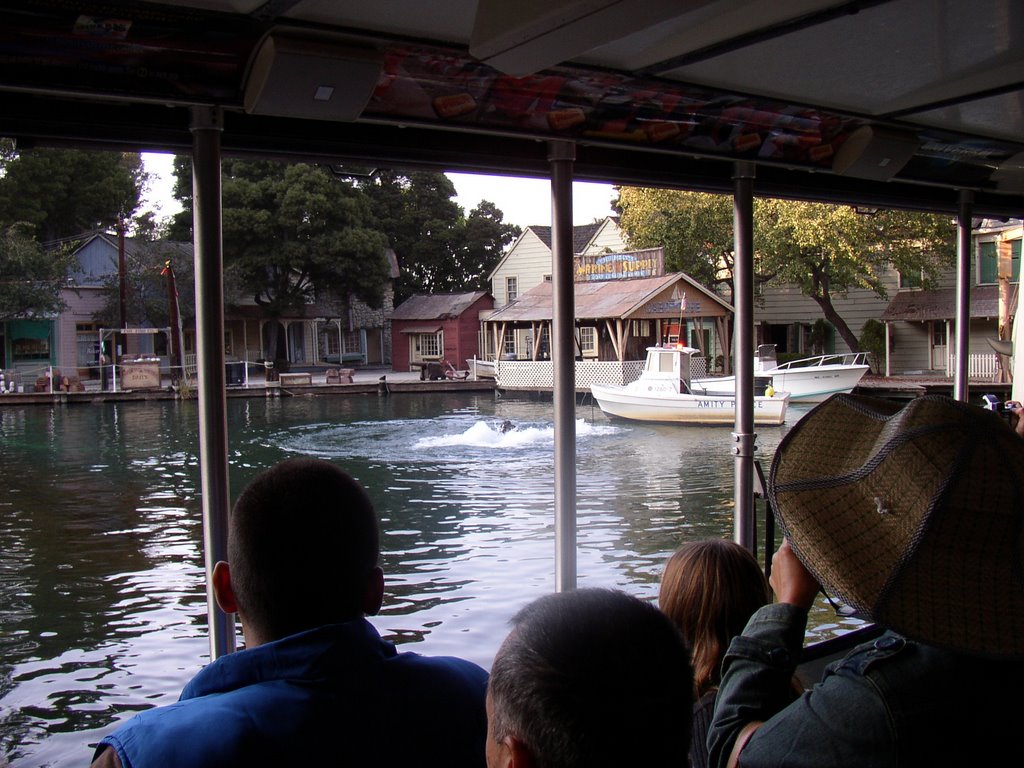
Just when you thought it was safe....

Troubled waters

Bruce Almighty

Bruce gets hung out to dry

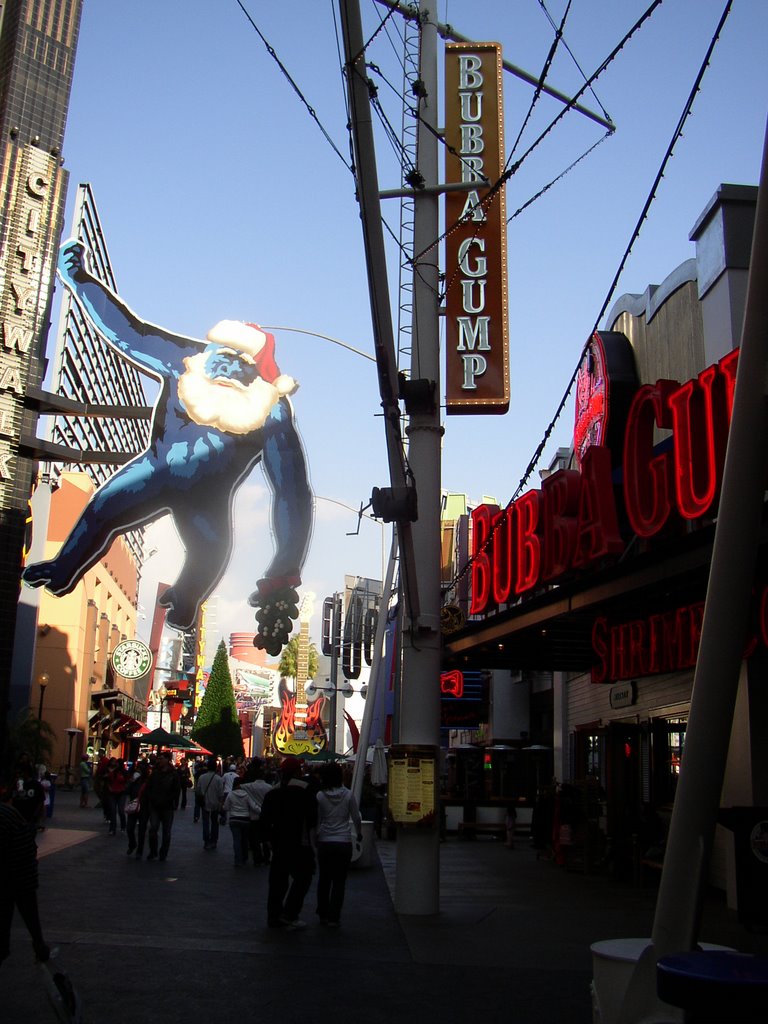
Nothin' says Christmas like a big blue monkey.